

60 New Homes Take Shape in the Heart of Margate

Anyone who regularly passes through Wighton Street has watched the change happen quickly. A site once occupied by a medical practice is now filled by a seven-storey housing development, which has reached its full structural height less than a year after construction began.

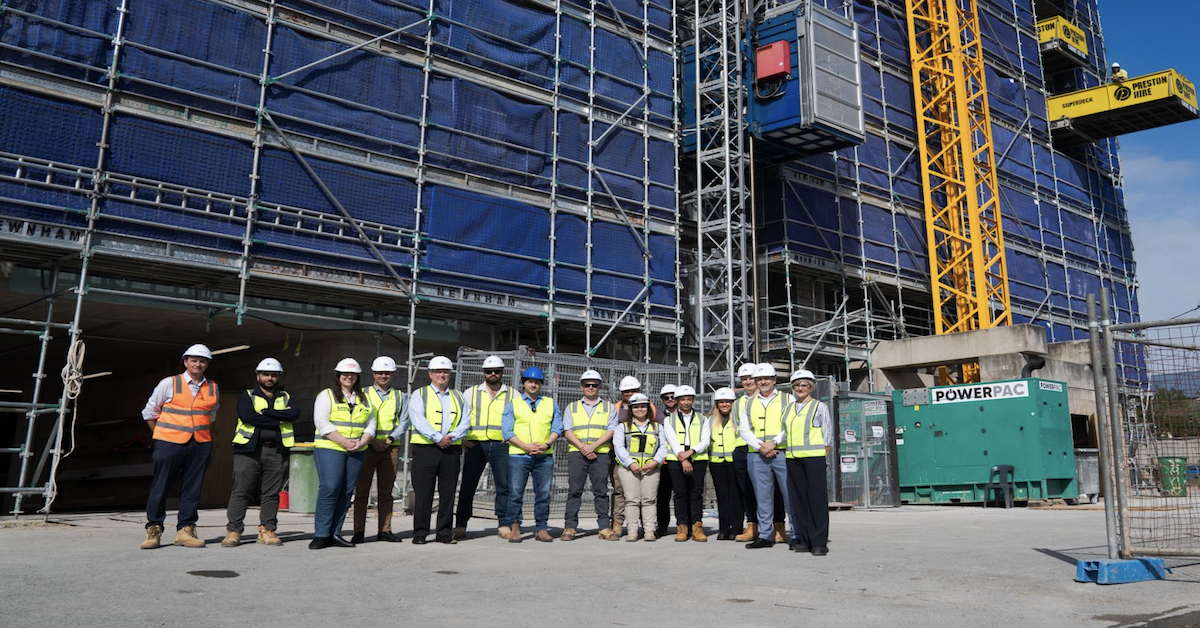
The building at 17 Wighton Street has officially topped out, meaning the main structure is now in place. There is still plenty to be done before anyone moves in — including the façade, internal fit-out, services and landscaping — but the project remains on course for completion in early 2027.

When it opens, 18 apartments will be social housing and another 42 will be affordable housing, with Bric Housing managing the development. More than 80 people are ultimately expected to call it home.

That 18/42 split is an important one. Although the entire development is being delivered as social and affordable housing, the two groups of apartments serve different parts of the housing system and will not necessarily be allocated in the same way.
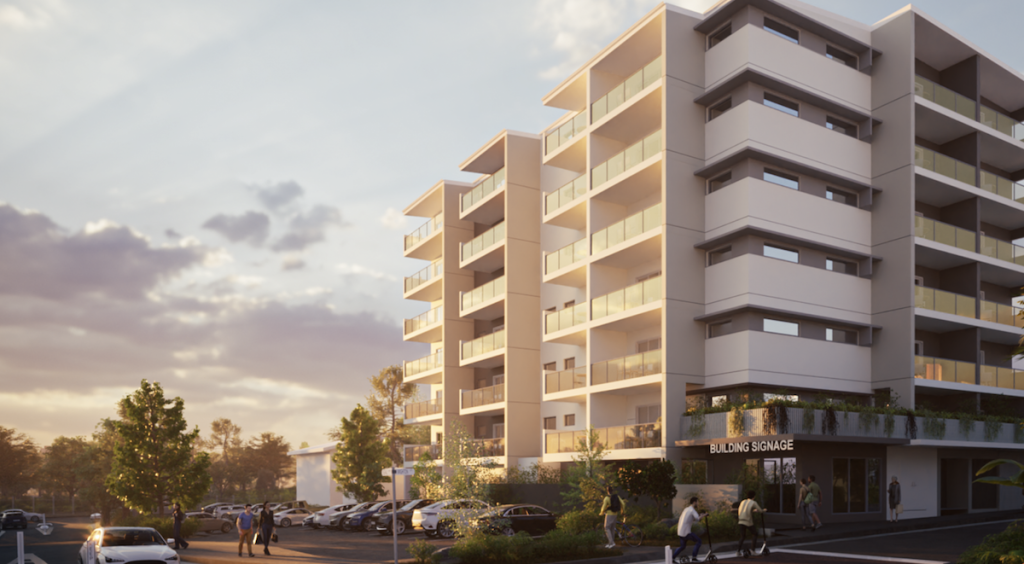
Artist’s impression of the 60-home development at 17 Wighton Street, Margate.
Photo Credit: Open Architecture Studio


Smaller homes make up most of the development

The mix reflects a strong emphasis on smaller households: 24 studios, 24 one-bedroom apartments and 12 two-bedroom apartments. Each will have a balcony, while the development also includes a communal room, office and landscaped entry courtyard.

Its location puts future residents immediately behind Margate’s main shopping strip, within walking distance of shops and services and close to public transport and the waterfront.

The 18 social housing homes will sit within Queensland’s social housing system. Bric does not maintain its own general social housing waiting list; eligible applicants register through the state system, with referrals made to community housing providers.

The remaining 42 homes are affordable housing, with Bric identifying key workers and other people priced out of the private rental market among those the project is intended to assist.

There is no indication yet that applications for the Margate affordable homes have opened, and Bric has not announced an allocation timetable for the completed development.

A project backed by several layers of finance

Getting the Wighton Street building off the ground has involved several organisations and a financing structure more complicated than a conventional government construction grant.

The project is supported under the first round of the Housing Australia Future Fund Facility. Housing Australia’s contracts register records a $51.47 million, 25-year HAFFF contract with Bric Homes Margate Ltd, the Bric subsidiary that will hold the property.

That figure is the value recorded for the HAFFF contract, rather than a published $51.47 million construction cost or a straightforward cash grant.

Conscious Investment Management is also providing finance, with the arrangement structured so Bric can retain ownership of the homes beyond the life of the HAFF program. Once the building is operating, Bric Housing will handle property and tenancy management.

The site had earlier been acquired and taken through development approval by Traders in Purple before becoming part of the Bric partnership. Open Architecture Studio designed the development, Forty4 Projects is delivering construction and DMA Partners has been involved as development adviser.

City of Moreton Bay has also supported the project through full remission of eligible infrastructure charges and development application fees.


Less than a year from construction start to full height

Construction formally began in November 2025. By around May, ground works were behind it, the first two suspended slabs had been poured and a tower crane had become part of the Wighton Street skyline. The topping-out milestone means the building has now reached its intended structural height.

It is one project within a considerably larger housing program across Moreton Bay. In June, City of Moreton Bay said 624 social and affordable homes were underway across the city.

Wighton Street accounts for 60 of them, but reaching full height is not the finish line. The months ahead will be spent turning the structure now standing over the former medical practice site into completed apartments and communal spaces.

If the current timetable holds, residents should begin calling the building home from early 2027.

Published 14-Sept-2026
Never Heard of Gateball? Redcliffe Has Been Playing It for 12 Years

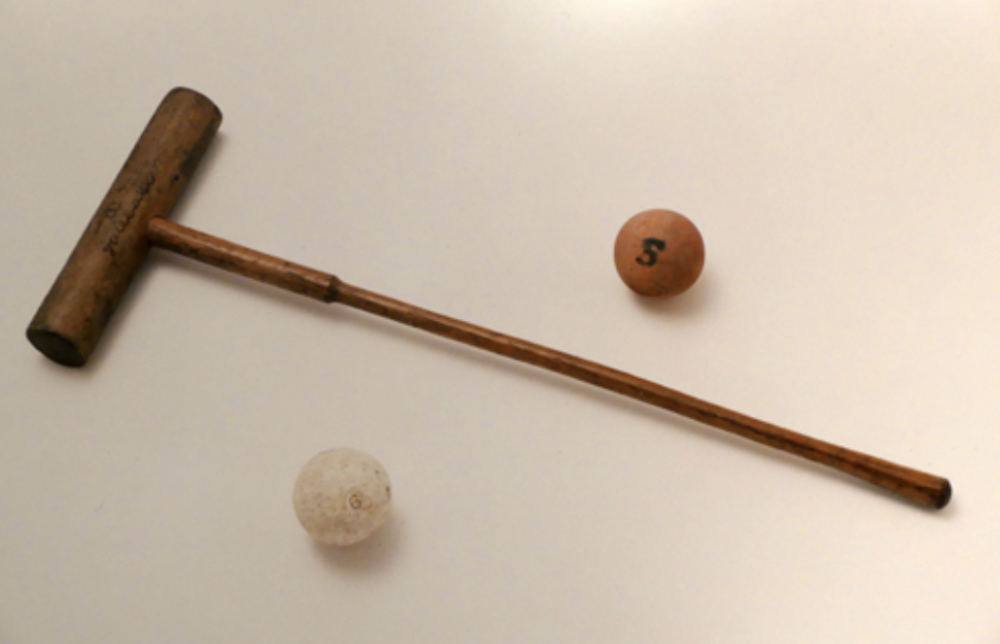
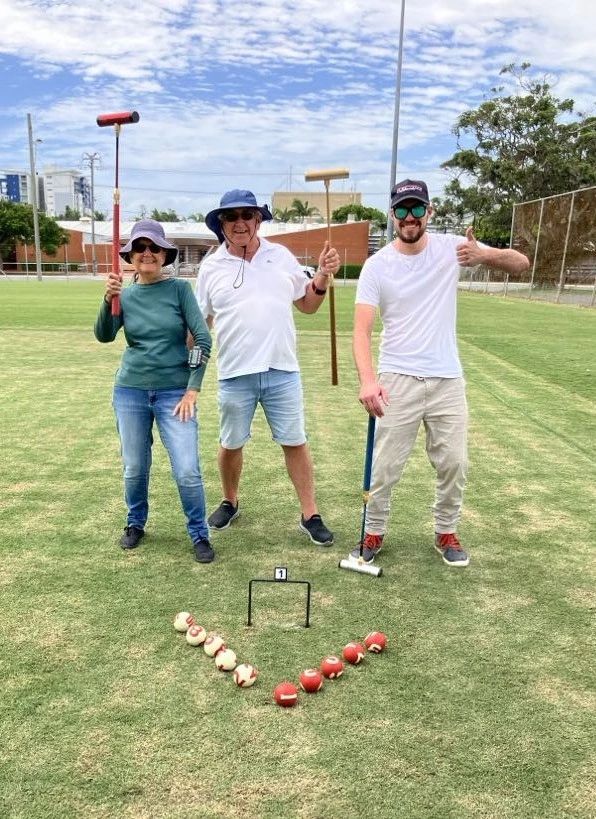
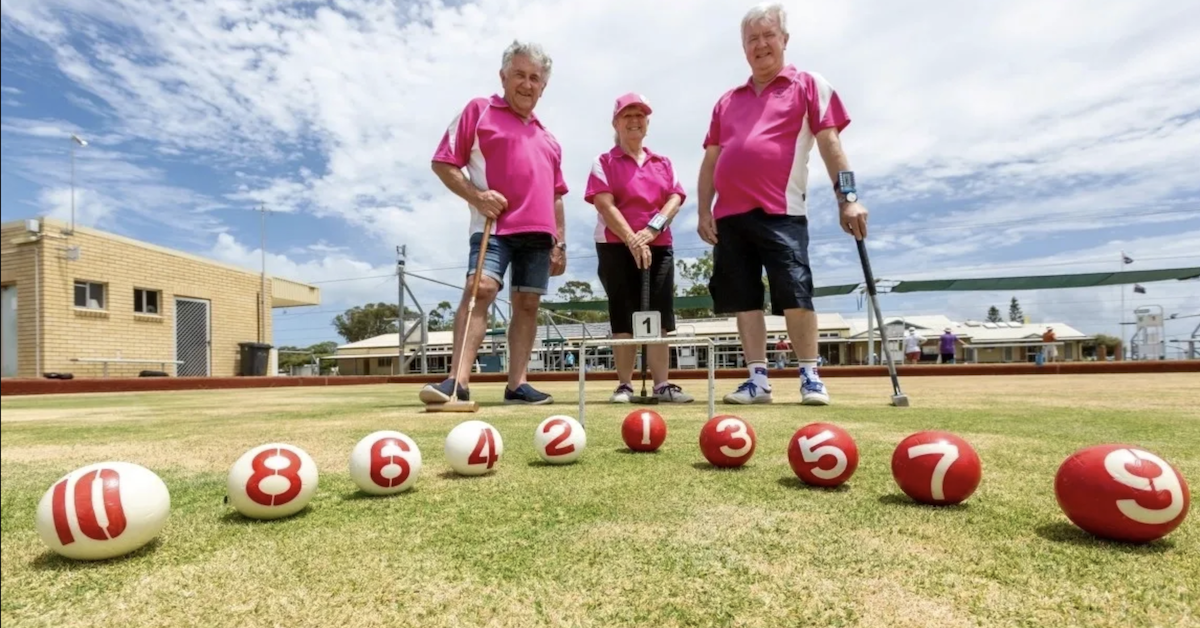
There are mallets, numbered balls and three small gates, and at first glance it could easily be mistaken for croquet. But the game being played opposite Redcliffe Library has its roots in post-war Japan — and Redcliffe has quietly had a club devoted to it for 12 years.

It is called gateball. Local players have taken the sport from Mary Nairn Field to Australian competitions and even a world championship in Brazil, yet plenty of people on the peninsula may still have no idea how the game works.

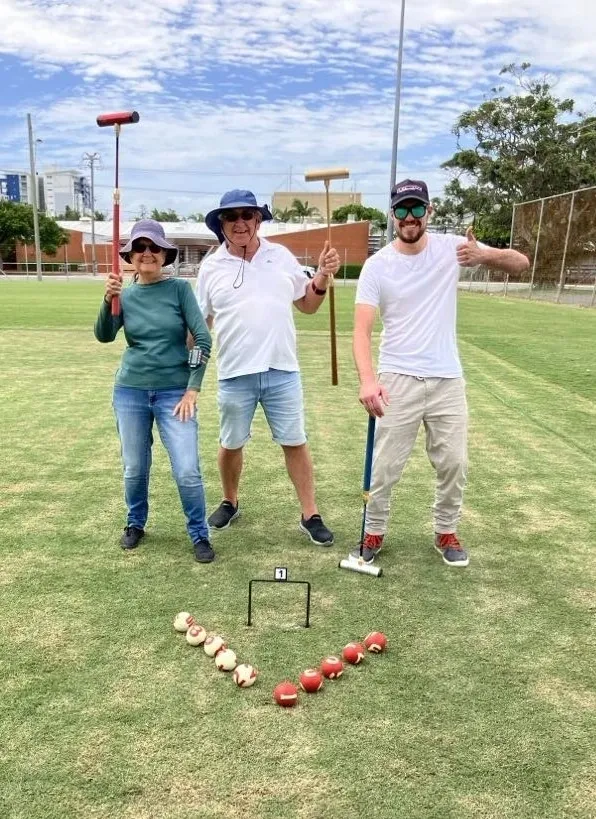
On Wednesday, 16 September, they can find out for themselves, with a free come-and-try session at Mary Nairn Field giving newcomers a chance to pick up a mallet and discover a sport that has been part of Redcliffe since 2014.


Photo Credit: World Gateball Union

Five Players, Three Gates and Plenty of Tactics

The croquet comparison is understandable. Gateball uses mallets, balls and gates, and the two sports share some ancestry. Once a match gets going, however, gateball has a character of its own.

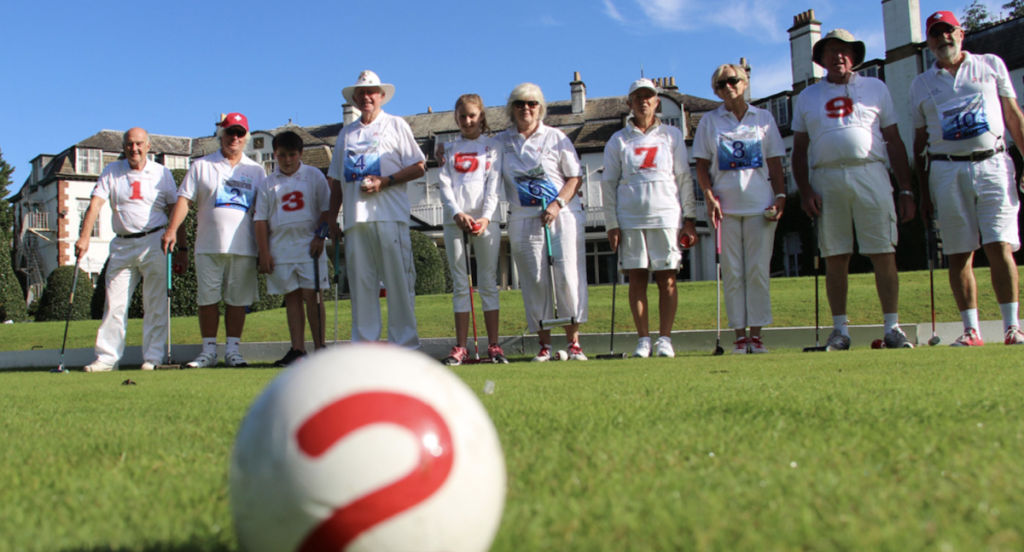
Two teams of five compete on a rectangular 20-metre by 15-metre court. One team plays the odd-numbered red balls and the other the even-numbered white balls, with players taking turns in numerical order.

The court has three gates and a goal pole. Players score a point by sending their ball through each gate in the correct sequence, then two points for hitting the goal pole after completing all three. The team with the most points when the 30-minute match ends wins.

There is another layer to it. Hit another ball and a player can earn an additional play and, in the right circumstances, use a move known as a “spark” to send that ball elsewhere.

That means a well-placed shot can help a teammate, move an opponent out of a dangerous position or change what happens several turns later. It is as much about tactics and positioning as getting a ball through a gate.

In Australia, gateball sits within the Croquet Australia sporting structure, but it is a distinct team game with its own rules, competitions and international governing body.

A Children’s Game From Post-War Japan

The unlikely journey to Redcliffe began nearly 80 years ago in Memuro, on Japan’s northern island of Hokkaido.

Eiji Suzuki created gateball there in 1947, taking inspiration from croquet at a time when Japan was still dealing with the aftermath of the Second World War.

One of the more surprising parts of its history is who Suzuki had in mind. Despite gateball later becoming associated particularly with older players in parts of Asia, it was originally devised as recreation for children at a time when toys and opportunities for play were scarce.

The game spread across Japan and eventually well beyond it. By 1985, the World Gateball Union had been established, bringing together countries and regions where the sport had taken hold.

Photo Credit: World Gateball Union

Australia’s documented connection came soon afterwards.

Gateball equipment was presented to then-Sydney mayor Douglas Sutherland during a Japanese promotional visit in 1986. Gateball Australia records the country’s first known game on 14 February 1989, when visiting Japanese players demonstrated the sport at Coogee Croquet Club and Australians joined them.

Australia began competing internationally, held its inaugural Australian Gateball Championships in Sydney in 1999 and joined the World Gateball Union in 2003.

Queensland developed its own competition and clubs in the years that followed, with croquet clubs playing an important role in giving the unfamiliar game somewhere to establish itself.

By 2014, it had a home in Redcliffe.


From Redcliffe to a World Championship

Redcliffe Gateball Club was established that year and remains based at Lot 804 Lamington Drive, opposite Redcliffe Library.

What began locally did not stay local.

In 2018, a Redcliffe team travelled to São Paulo, Brazil, to compete at the World Gateball Championships. Redcliffe recorded a win and a loss on the opening day, including a seven-point victory over a Paraguayan team, before its campaign ended in the group stage.

Back home, the stakes are considerably lower.

The club advertises regular Wednesday afternoon and Saturday morning play at its Lamington Drive base, while newcomers have opportunities to try the sport through City of Moreton Bay’s Healthy & Active Moreton program.

The next session will run from 1pm to 3pm on Wednesday, 16 September at Field 3, Mary Nairn Field, Lamington Drive, opposite Redcliffe Library. It is free and open to people aged eight and over, with participants under 18 required to attend with an adult and remain under adult supervision.

Bookings are available through City of Moreton Bay.

Gateball may never have achieved pickleball’s name recognition in Australia. But after 12 years in Redcliffe — and a journey that has taken local players halfway around the world — it is hardly a newcomer to the peninsula.

Published 14-Sept-2026

Dolphins Beat Warriors 26–16 to Reach Preliminary Final

The Dolphins are through to a preliminary final after turning an eight-point second-half deficit into a 26–16 win over the Warriors in Auckland, extending their remarkable late-season run to eight straight victories.

For almost an hour, their first NRL final was a grind. The Warriors had the crowd behind them, a lead on the scoreboard and Taine Tuaupiki steadily adding points from the kicking tee, while the Dolphins struggled to turn their opportunities into enough scoreboard pressure.

That changed in the final quarter. Herbie Farnworth crossed in the 60th minute, Hamiso Tabuai-Fidow followed six minutes later and Jack Bostock added another in the 74th, transforming a 16–8 deficit into a 26–16 victory.

It was not the free-flowing afternoon their recent scoring form might have suggested. The Dolphins instead had to stay with a finals match that became messy and frustrating before their attacking players finally found the openings they needed.


Warriors Keep the Scoreboard Moving

New Zealand were happy to take points whenever the Dolphins gave them the opportunity. Tuaupiki kicked an eighth-minute penalty before Jamayne Isaako answered four minutes later, then scored the opening try in the 15th minute and converted it himself.

Another Tuaupiki penalty made it 10–2 before Selwyn Cobbo gave the Dolphins their first try in the 25th minute. Isaako converted and, despite New Zealand having controlled much of the opening quarter, the margin was back to two.

The game then entered a chaotic stretch. Adam Pompey was sent to the sin bin in the 28th minute before Kurt Capewell and Cobbo were both binned five minutes later. Isaiya Katoa was also placed on report during the same passage.

Very little scoring came from all that disruption. Tuaupiki’s penalty on the stroke of half-time was the only further addition, sending the Warriors to the sheds 12–8 ahead.

That was largely how New Zealand had built their advantage. The teams had scored one try each, but the Warriors kept taking the two points on offer and making the Dolphins chase them.

Dolphins Stay Within Reach

The Dolphins’ habit of conceding starts had been one of the concerns heading to Auckland after their huge recoveries against Brisbane and Gold Coast. This time the deficit never became quite as alarming, although they again spent a long period playing from behind.

Tuaupiki kicked two more penalties early in the second half, stretching the Warriors’ lead to 16–8 by the 53rd minute. New Zealand had now kicked five penalty goals but still had only one try, leaving the Dolphins close enough for one productive attacking spell to change the match.

Farnworth provided it in the 60th minute, breaking through for a try that Isaako converted to make it 16–14. Six minutes later Tabuai-Fidow found his way through and Isaako’s conversion put the Dolphins ahead for the first time at 20–16.

After spending most of the afternoon trying to get back on terms, the Dolphins suddenly had New Zealand chasing them. The game had also opened enough for their dangerous runners to become a much bigger factor.

Bostock Puts It Beyond Reach

There was still plenty of time for New Zealand at 20–16, but the Dolphins looked increasingly threatening once they had the lead. Bostock had already broken the Warriors line earlier in the half and, in the 74th minute, he crossed for the try that effectively settled the contest.

Isaako’s conversion took the score to 26–16 and completed a faultless afternoon from the tee. He kicked four conversions and a penalty goal, while Cobbo, Farnworth, Tabuai-Fidow and Bostock shared the Dolphins’ four tries.

New Zealand’s scoring had a very different shape. Tuaupiki accounted for all 16 Warriors points with their only try, a conversion and five penalty goals.

Those twos had been enough to keep the Dolphins at arm’s length for much of the afternoon. Once Farnworth and Tabuai-Fidow struck six minutes apart, however, the Warriors needed tries of their own and could not find them.


A Win With Some Rough Edges

The Dolphins did not come through the afternoon without concerns. Thomas Flegler left for an HIA inside the opening 10 minutes and did not return, while Kodi Nikorima and Connelly Lemuelu were both placed on report during the second half.

Discipline also helped the Warriors accumulate their five penalty goals, and the three first-half sin bins made an already tight contest difficult to settle. Against a side able to turn more of those opportunities into tries, the Dolphins could have faced a much steeper climb.

What mattered in Auckland was that they never allowed the Warriors to get far enough away. An eight-point deficit after 52 minutes did not force them to abandon their game, and when the chances came, the players who have driven much of their late-season surge took them.

Farnworth brought the Dolphins back within two, Tabuai-Fidow put them ahead and Bostock gave them the breathing room they needed to see out the afternoon.

Eight Straight and Into the Final Four

Before the match, Auckland presented a different test of the run that had carried the Dolphins to third place. They had won seven straight, but none of those games had involved finals pressure or a trip to a ground where the Warriors had lost only twice all season.

Their eighth win looked different from many that came before it. They spent most of the match behind, lost Flegler early and had to negotiate a contest punctuated by penalties, sin bins and long periods when the Warriors controlled the scoreboard.

The decisive passage came after the hour mark. Farnworth scored in the 60th minute, Tabuai-Fidow in the 66th and Bostock in the 74th, turning an eight-point deficit into a 10-point win.

The Dolphins will now sit out next weekend before returning for a preliminary final, one victory away from a grand final appearance.

Four seasons into their NRL life, their first finals match has ended with their first finals win.

Published 12-September-2026

Redcliffe Tower Plans Set Out 44 Apartments Above Suttons Beach 

Redcliffe tower plans could bring 44 apartments to a waterfront block above Suttons Beach, with two buildings proposed across the Marine Parade and Sutton Street frontages as the development application remains under assessment.


Two Street Frontages Above Suttons Beach

DA/2026/4300 covers 39 Marine Parade and 28 Sutton Street, placing the proposal between the Redcliffe foreshore and the residential area to the west.

The architectural plans describe an established mix of development around the site. Eight-storey apartment buildings form part of the Marine Parade setting, while the Sutton Street side includes lower-scale residential development alongside Beach House on Suttons.

Primecrest Developments Pty Ltd lodged the application on 22 August 2026. It seeks approval for 44 multiple dwellings, a two-into-two boundary realignment and associated easements.

If approved, construction is proposed in two stages. The Marine Parade building would contain 16 apartments — 15 with three bedrooms and one with two bedrooms — while the Sutton Street building would contain 28 two-bedroom apartments.

The proposed buildings would rise to as many as eight storeys, with the architectural material identifying a 27-metre height control above natural ground level.

waterfront development
Photo Credit: DA/2026/4300

Redcliffe Tower Plans Put Vehicle Access On Sutton Street

Both buildings would be reached by vehicles from Sutton Street.

The Marine Parade building would provide 28 car spaces, including four visitor spaces, and 10 bicycle spaces. The Sutton Street building would have 47 car spaces, including seven visitor spaces, together with 23 bicycle spaces.

Detailed drawings show a basement parking level extending beneath both proposed lots, with another basement level beneath the Sutton Street building. Ground-level visitor parking is also planned on the Sutton Street side.

The proposed subdivision would retain two lots, with the plan also identifying easements associated with access, services, sewer infrastructure and a padmount area.

Redcliffe tower plans
Photo Credit: DA/2026/4300

Landscaping Planned Along Both Street Edges

The way the development meets Marine Parade and Sutton Street forms a substantial part of the plans.

On Marine Parade, landscaping is proposed around the building entry and along the street-facing edge, including pandanus and palm species. The plans also show planted terraces and vegetation along parts of the building façade.

A communal recreation area for residents would include a swimming pool, sun lounges and an outdoor shower. Planting is proposed around the pool and podium edges.

Along Sutton Street, the plans include street trees, screening plants and landscaping around the building entrance and driveway areas. The landscape design also proposes planting along site boundaries and around parts of the sewer easement.

The Marine Parade building has been oriented towards the bay, with living areas and balconies on typical floors facing east. Architectural screening is proposed around balconies and openings, with the design material identifying privacy between the development and neighbouring properties as one consideration.

The Sutton Street building uses a wider frontage, with four apartments proposed on typical residential levels and a planted central section dividing parts of the façade.

Application Awaits Response

The City of Moreton Bay is assessing DA/2026/4300 as a code-assessable application.


An information request was issued during the assessment process, and the application is currently awaiting a response. That stage began on 7 September 2026, with 8 December 2026 listed as the due date.

The application remains current and has not been approved.

Published 9-September-2026. Updated 12-September-2026

Seven Straight, Then Auckland: Dolphins Face Their First Finals Test

The Dolphins will take a seven-game winning streak into the first finals match in club history on Saturday, but their reward for finishing third is a trip to Auckland to face a Warriors side that has won six straight and lost only twice at Go Media Stadium this season.

The qualifying final brings together two of the competition’s form teams, with a direct passage to the preliminary finals at stake.

The Dolphins arrive after their 24–20 win over Gold Coast, a result that extended their best run of the season but also gave Kristian Woolf plenty to address. They were 14–0 down inside 16 minutes before working their way back, having also recovered from 24–0 down against Brisbane earlier in the winning streak.

Those comebacks have become part of the Dolphins’ recent story. Against the Warriors, the more useful lesson may be how much work was required after conceding those starts.

New Zealand have been scoring heavily through the closing rounds, averaging 39 points a game since Round 22, and Go Media Stadium has been one of the competition’s tougher trips. The Warriors have won eight of their 10 games there in 2026 and will host a final at the ground for the first time since their 40–10 win over Newcastle in 2023.

Little Between Them This Year

The Dolphins at least travel knowing they have already matched the Warriors twice.

New Zealand won 20–18 when the teams met in Wellington in Round 8. At Suncorp Stadium in Round 17, the Dolphins turned that result around, with Selwyn Cobbo scoring late before Jamayne Isaako landed the sideline conversion for a 26–24 victory.

Four points separated the teams across the two games.

The circumstances this time are considerably different, particularly with the Warriors at home, but those results provide a useful measure of the matchup. Neither side was able to establish clear superiority over the other during the regular season.

The Dolphins also head to Auckland in considerably better form than they were for either meeting. Their seven-match run has taken them through several different types of games, from the huge comeback against Brisbane to last week’s much tighter finish against Gold Coast.

Dolphins Welcome Back Key Trio

Woolf will also have three important players back after they missed the final round.

Cobbo returns on the wing after an ankle issue, Kodi Nikorima resumes at five-eighth after managing a hamstring problem and Kulikefu Finefeuiaki comes back into the second row following a knee issue.

Nikorima’s return reunites him with Isaiya Katoa, while Hamiso Tabuai-Fidow remains at fullback and Herbie Farnworth, Jack Bostock, Cobbo and Isaako complete a backline that has been central to the Dolphins’ late-season surge.

The Warriors have strengthened their side as well. Wayde Egan and Kurt Capewell return after being rested, Leka Halasima is back from an ankle injury and Jackson Ford has been named on the bench for his first appearance since suffering a pectoral injury in Round 16.

That leaves both teams with plenty available around the edges, although getting the opportunity to use it will depend heavily on what happens through the middle.

Plenty Riding on the Middle

James Fisher-Harris, Mitch Barnett and Erin Clark give the Warriors a strong platform, with Egan back at hooker. The Dolphins will lean heavily on Tom Flegler, Tom Gilbert and Morgan Knowles, while Max Plath and Finefeuiaki add considerable work on the edges.

For the Dolphins, holding that contest is particularly important because of what Katoa can do when he is playing on the front foot.

He has Tabuai-Fidow and Farnworth outside him, Nikorima alongside him and Cobbo and Isaako finishing on the wings. When the Dolphins are getting quick enough ball to bring those players into the game with space, there are threats across the field.

The alternative is Katoa working from deep inside his own half, with the Warriors able to set their defensive line and control where the Dolphins begin their sets.

That is where last week’s opening against the Titans becomes relevant. Gold Coast’s 14–0 lead forced the Dolphins to spend much of the first half repairing the scoreboard. They managed it, but the Warriors present a different proposition if they are given the same opportunity at home.

A Different Kind of Away Game

Finefeuiaki knows the setting better than most in the Dolphins side. The New Zealand-born forward has spoken this week about the noise expected at Go Media Stadium and the difficulty it can create for players trying to communicate.

Their record there backs up Finefeuiaki’s warning: the Warriors have lost only twice in 10 games at Go Media Stadium this season.

Their only two losses from 10 games at the ground this season have made Auckland an important part of their second-place finish, while six consecutive wins have taken them into the finals with momentum of their own.

That gives the Dolphins a fairly clear picture of what awaits them. Their recent run has included wins in difficult positions and evidence that they can score quickly enough to change games, but Saturday may require a more controlled performance than some of those victories.

A clean start, field position and the ability to stay with the Warriors through the middle would give Katoa and the Dolphins’ backline a chance to do the rest.

First Final, Bigger Opportunity

The historical significance of Saturday has been unavoidable this week, four seasons after the Dolphins entered the NRL.

Their position going into the match is more interesting than the milestone itself.

This isn’t a side that scraped into eighth and arrived simply pleased to have made September. The Dolphins finished third, have won seven consecutive games and split their two meetings with the second-placed Warriors this season.

Victory would put them straight into a preliminary final, one win from a grand final appearance. Defeat would send them home to Brisbane for a sudden-death semi-final.

The Dolphins have spent the past two months building the form that put them in this position. Saturday in Auckland is the first chance to see how much of it carries into finals football.

Match Details

New Zealand Warriors v Dolphins
2026 NRL Telstra Premiership — Qualifying Final
Saturday, 12 September 2026
4:05pm AEST / 6:05pm NZST
Go Media Stadium, Auckland

Published 11-September-2026

Seven Margate Beach Picnic Shelters Set for Renewal

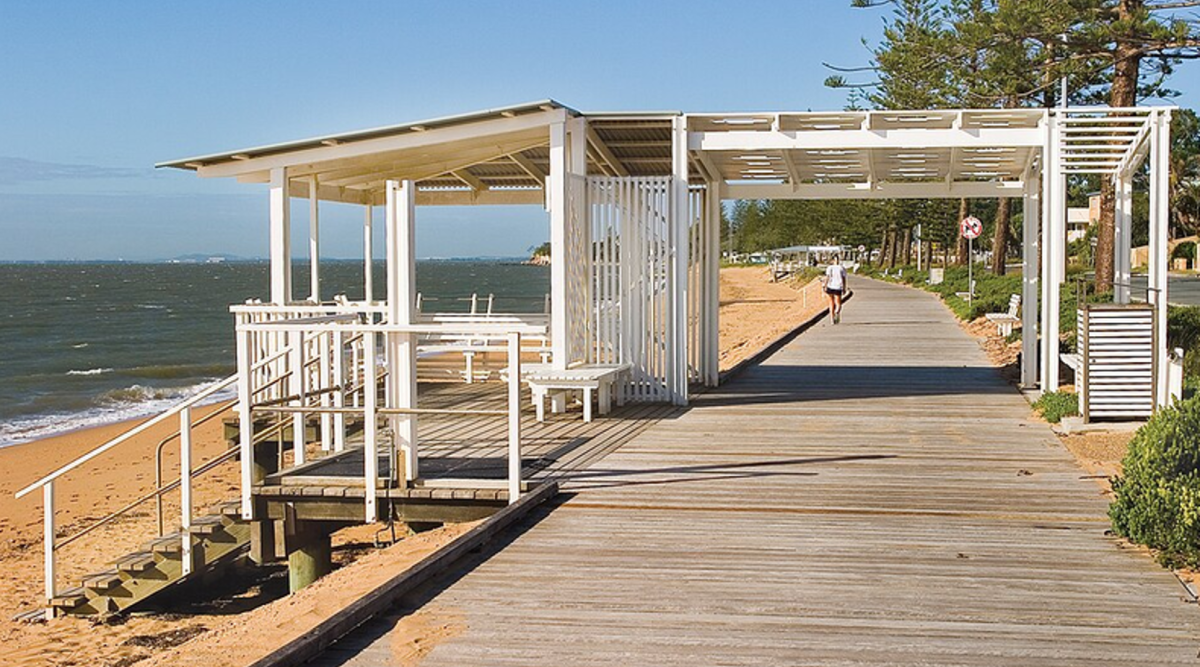
Seven picnic shelters at Margate Beach Park remain in line for renewal, with the project continuing in City of Moreton Bay’s 2026–27 works program.

The shelters were identified for upgrades in Council’s previous budget alongside work on the park’s public amenities. The latest budget again provides for picnic shelter renewal, although detailed designs and a construction timetable have not yet been released.

As of September, Council has not announced that work on the seven shelters has started or named a contractor specifically for the project. It has also not detailed whether the existing structures will be completely replaced or whether some will be refurbished.


Seven picnic areas in the program

The work centres on seven shelters at Margate Beach Park, the waterfront recreation strip along Margate Parade.

The park includes covered picnic tables, electric barbecues, seating, drinking fountains, toilets and showers, while the waterfront boardwalk provides a continuous route for walkers and cyclists along this part of the Peninsula.

Exactly what will change around each shelter is yet to be confirmed. Published project information does not detail replacement tables, barbecues, lighting, bins, landscaping or bicycle facilities, nor does it identify changes to the adjoining boardwalk.

There is also no announced closure of Margate Beach Park. Beach access, parking and pedestrian and cycle access remain available, with any temporary restrictions expected to become clearer once Council releases a construction program.

The shelters continue a long recreational use of this stretch of Moreton Bay foreshore. Suttons and Margate beaches became popular swimming, picnicking and day-trip destinations as Redcliffe developed as a seaside resort, and the waterfront remains one of the Peninsula’s busiest outdoor recreation areas.

$650,000 amenities upgrade alongside shelters

The shelter renewal sits alongside an upgrade to Margate Beach Park’s public amenities, with $650,000 in Queensland Government funding allocated to the Margate Beach Park Amenities Upgrade through the South East Queensland Community Stimulus Program.

That funding is for the amenities project and should not be read as the cost of renewing the seven shelters. Council has not published a combined final cost for the two components in the material reviewed by Margate News.

Council’s park listing identifies toilets and showers among the facilities at Margate Beach Park, but available project documents do not provide enough detail to establish precisely what will be replaced or altered as part of the amenities upgrade.

Council has also not stated that the seven shelters are unsafe. The works have instead been identified through its capital program for renewal of existing park infrastructure.

Separate from the Suttons Beach Pavilion works

One potential source of confusion is the wording in Council’s latest budget, which describes the shelter renewal as being at “Suttons Beach Park, Margate”.

Council’s park directory identifies Margate Beach Park on Margate Parade and Suttons Beach Park further north on Marine Parade in Redcliffe. Earlier Council planning documents have also considered the adjoining areas together as the broader Suttons Beach–Margate Beach Parks precinct.

The seven shelters, however, were specifically identified at Margate Beach Park in Council’s 2025–26 budget.


The project should not be confused with the much larger Suttons Beach Pavilion redevelopment further north. That is a separate project, with construction already underway and completion expected in 2027.

For Margate Beach users, the next significant step will be the release of the shelter designs and construction schedule, which should establish when individual picnic areas will be affected and exactly what will replace or be retained from the existing structures.

Published 9-September-2026

Redcliffe Housing Support Grows as 41 Positive Outcomes Recorded

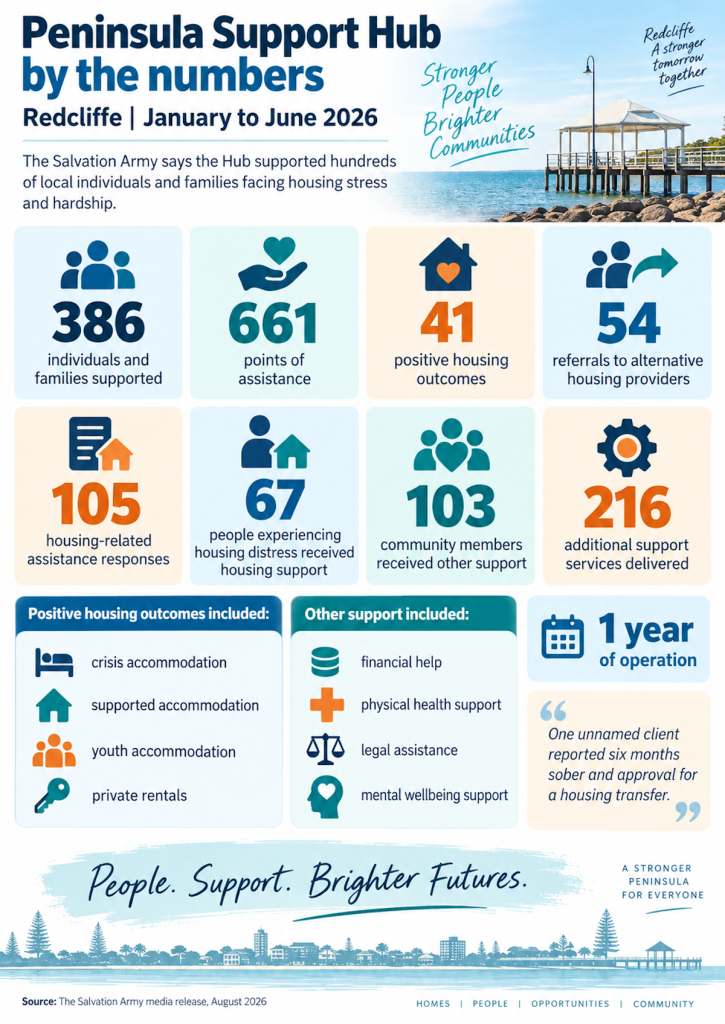
Housing pressure remains a major part of demand at Redcliffe’s Peninsula Support Hub, where 41 individuals and families recorded positive housing outcomes in the first half of 2026. The Salvation Army said the outcomes included crisis accommodation, supported accommodation, youth accommodation and private rentals.


From January to June, the Hub supported 386 individuals and families through 661 instances of assistance. The organisation also recorded 54 referrals to other housing providers and 105 housing-related assistance responses for 67 people experiencing housing distress.

Beena Saju, Regional Manager for The Salvation Army Homelessness Services, said the results represented more than individual service transactions.

“Every housing outcome, every connection to support, and every positive step forward represents a person or family moving closer to stability and hope.”

Housing remains the Hub’s biggest area of need

Housing remained the most significant area of need during the six-month reporting period, according to The Salvation Army. Another 103 community members received 216 instances of support involving financial problems, physical health, legal matters and mental wellbeing.

An unnamed client had sought help from the Salvos while dealing with alcohol dependency and housing difficulties. The organisation said the person later reached six months of sobriety and received approval for a housing transfer. 

Saju said people using the service had shown resilience and determination while facing difficult circumstances.

New housing projects move ahead in Redcliffe

Additional housing is also being developed or proposed in Redcliffe. The Queensland Government is building an eight-storey social housing development on Anzac Avenue with 49 self-contained one- and two-bedroom homes for about 70 people.

Tenants will be referred from Queensland’s Social Housing Register through the Moreton Bay Housing Service Centre. The project will include accessible homes, communal space and a ground-floor meeting area where support can be provided to residents.

A separate Moreton Bay Youth Foyer is proposed for Redcliffe, with plans for 40 self-contained units for young people aged 16 to 25. Eligible residents would be able to rent accommodation while receiving on-site support connected with education, training and employment.

Further projects are progressing across the wider City of Moreton Bay. A 14-unit community housing development at Morayfield is moving ahead through a partnership involving City of Moreton Bay, Coast2Bay Housing and the Queensland Government, while council has also backed a community housing project at Caboolture and says social and affordable housing projects are under construction at Deception Bay and Mango Hill.

Statewide demand remains high

Queensland’s housing register also points to continuing demand for social housing. As of 30 June 2026, 24,866 households representing 46,037 people were on the state’s social housing register, while 5,292 households had entered social housing during the previous financial year.

City of Moreton Bay says rising living costs and a long-term lack of investment in social and affordable housing have worsened housing insecurity and homelessness locally. Its five-year Housing and Homelessness Action Plan focuses on people sleeping rough, partnerships with service providers and government, management of public spaces and measures intended to improve housing options.

In August, council opened Wyllie Park at Petrie as a free tent-camping option, including for people experiencing homelessness who were unable to access crisis accommodation or emergency housing. Council said the site was voluntary and was not an alternative to established crisis accommodation or longer-term housing.

Council says crisis accommodation and social housing are Queensland Government responsibilities and that it does not provide housing for people experiencing homelessness. Its role includes referring people to specialist services and supporting community and affordable housing projects through measures such as low-cost leases of council land and waived development and infrastructure charges. 

Support remains available in Redcliffe

The Peninsula Support Hub provides housing referrals and practical support to people experiencing housing distress while they seek accommodation. The six-month figures record 41 positive housing outcomes alongside continued referrals, housing assistance and support for financial, health, legal and mental wellbeing issues.


The Hub operates at 49 Portwood Street, Redcliffe. People experiencing or at risk of homelessness can also contact Queensland’s 24-hour Homeless Hotline on 1800 474 753 or the Moreton Bay Housing Service Centre on (07) 5432 0700.

Published 9-Sept-2026

150 Years of Humpybong: The School That Grew With Redcliffe

When Humpybong’s first pupils arrived for school on 1 February 1876, their classroom was a small slab-and-bark building near what is now Elizabeth Avenue and Duffield Road.

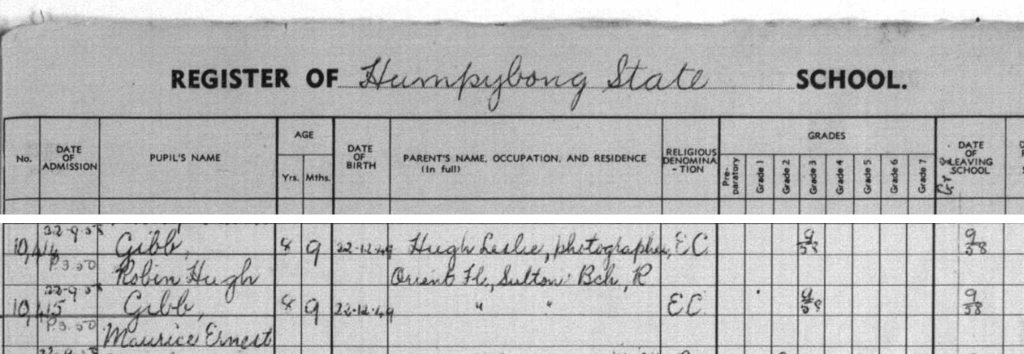
In the 150 years since, the school has moved to Ernest Street, split into separate primary and infants schools and come back together again. Its enrolment eventually climbed to almost 1,000, and among the thousands of children who passed through its classrooms were three brothers named Barry, Robin and Maurice Gibb.

Redcliffe changed just as dramatically around it. Yet one thing survived all those changes: the Humpybong name, inherited from an earlier chapter of the Peninsula’s history and still carried by the school today.

This September, Humpybong State School marks its 150th anniversary.


READ: When Dolly Came to Brisbane: A Local Farewell to a Country Music Legend


The Name Redcliffe Didn’t Erase

Humpybong is an unusual name now, but in the 19th century it was much more familiar locally. City of Moreton Bay historical records associate it with Aboriginal words describing the shelters left behind after the Moreton Bay penal settlement was moved from Redcliffe to the Brisbane River in 1825.

The precise translation is less certain than some popular accounts suggest. Council traces the name to ngumpin, later anglicised as “oopie-bong”, with “humpy” or “oompie” referring to shelter and “bong” presumed to mean vanished.

As Redcliffe became the established name for the Peninsula, Humpybong gradually receded from everyday use. The school kept it, making it one of the most visible reminders of the older place name.

From Elizabeth Avenue to Ernest Street

The original slab-and-bark schoolhouse was replaced by another building nearby in 1878. Three decades later came a much bigger change.

Humpybong Provisional School and the separately operated Redcliffe Provisional School both closed in December 1908. Their pupils came together in March 1909 at a new Humpybong State School in Ernest Street, where the school remains today.

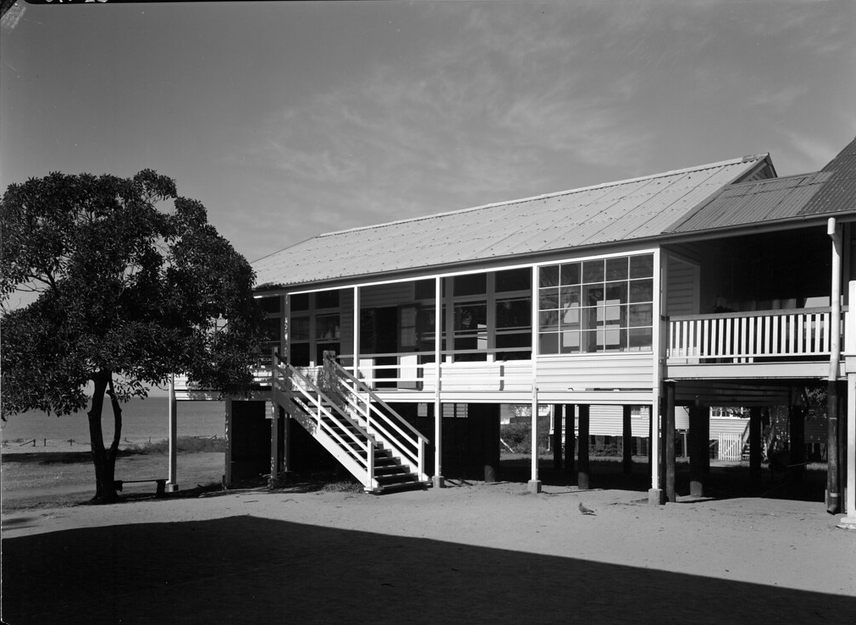
Humpybong State School, 1949.. Photo Credit: Queensland State Archives. Image ID: 3319316

The district around it was changing quickly. The Hornibrook Highway opened in 1935, and post-war growth pushed Redcliffe’s population from 8,871 in 1947 to about 18,000 by 1959.

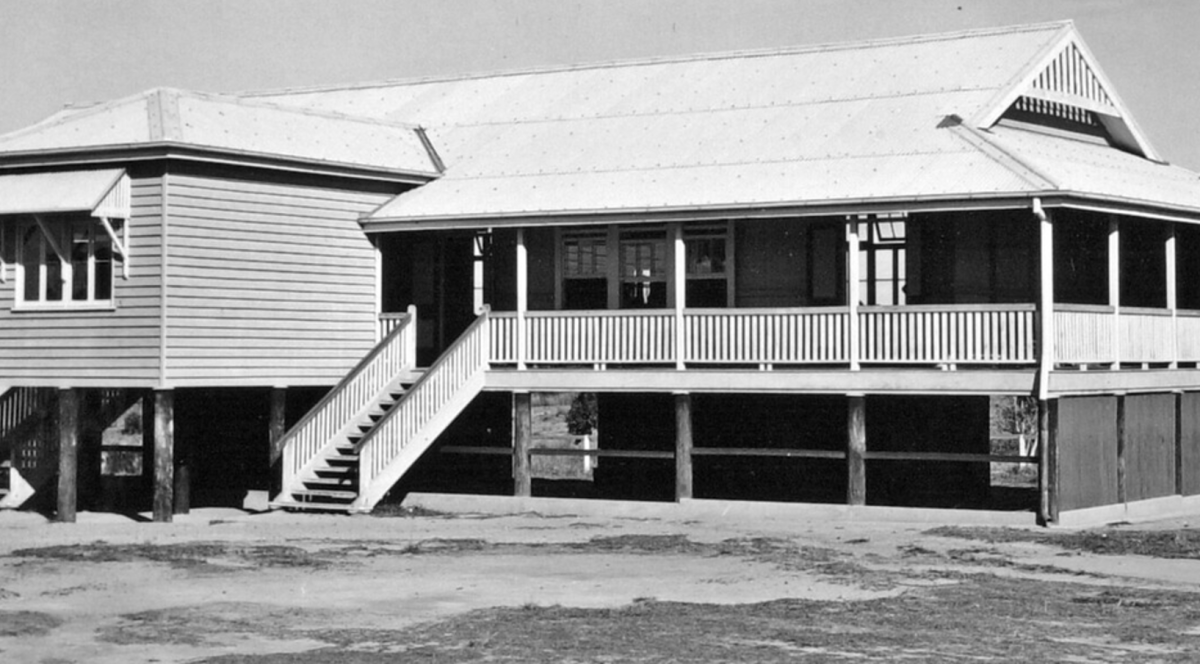
Humpybong grew with it. A Queensland State Archives photograph records a new classroom in 1952, and in 1959 Humpybong State Infants School opened separately for younger children. The two schools remained separate until they were reunited in 1998.

Nearly 1,000 Pupils by 1999

Official records put Humpybong State School’s enrolment at 992 students in 1999. Today it is considerably smaller, with Department of Education figures recording 464 Prep to Year 6 students in February 2026 and Benjamin Reed as principal.

Those figures bookend one period of a school that has repeatedly changed size and shape as the Peninsula around it changed.


READ: Bells Caravan Park Mural Will Put Clontarf’s Stories on the Wall


A Bell From 1929

One piece of Humpybong’s earlier school life survives at Redcliffe Museum: a school bell dating from 1929. For the anniversary, it is being displayed alongside old uniforms and other memorabilia.

The museum will host an Alumni Stories afternoon from 1pm to 3pm on Saturday 12 September, followed by Humpybong State School History: Then and Now from 10am to noon on Saturday 19 September, looking at changes in classrooms, teaching, transport and school life.

The school’s main birthday celebration takes over Waterfront Oval from 4pm to 8.15pm on Friday 11 September, with performances, fete activities, a bush dance and birthday cake. Entry is free, with an RSVP requested to help organisers plan numbers.

Former students and staff return the following morning for the Humpy Tea Reunion from 9am to 12.30pm, featuring school tours, historical displays, memorabilia and an art show.

The Peninsula outside Humpybong’s gates bears little resemblance to the place where children first walked into a slab-and-bark classroom in 1876. The school has moved and rebuilt, generations have come and gone, but 150 years later the old Humpybong name remains.

Published 7-September-2026

The Road to the Grand Final: Your 2026 Dolphins Finals Guide

Four seasons after entering the NRL, the Dolphins are heading into September from third place, with their first finals assignment taking them across the Tasman to face the second-placed New Zealand Warriors.

The qualifying final at Go Media Stadium on Saturday, 12 September offers a direct route deep into September. Win in Auckland and the Dolphins move straight into a preliminary final with a week off; lose and the double chance earned through their top-four finish keeps their season alive.

After spending their first three seasons trying to reach September, the Dolphins have finally arrived. What matters now is how far they can go.

Week One: Warriors v Dolphins

Qualifying Final
New Zealand Warriors (2nd) v Dolphins (3rd)
Saturday, 12 September
Go Media Stadium, Auckland
4.05pm AEST / 6.05pm NZ time

Both sides arrive in serious form. The Dolphins have won seven consecutive matches and the Warriors six, setting up a qualifying final between two teams carrying genuine momentum into September.

They Already Know How Close This Can Get

Their only meeting this season provided a fair indication of how little may separate them.

The Dolphins won 26–24 at Suncorp Stadium in Round 17 after Selwyn Cobbo scored late and Jamayne Isaako converted from the sideline. That gives them evidence they can break down the Warriors, although repeating it in Auckland under finals pressure is a different assignment.

The Warriors have home advantage and a powerful middle capable of restricting the Dolphins’ attacking freedom, making the contest for field position particularly important.

Three Matchups That Could Shape It

The Battle Through the Middle

James Fisher-Harris, Mitch Barnett and Erin Clark give the Warriors considerable experience and physicality through the middle. The Dolphins have plenty to answer with, but they need to earn the field position that allows their strike players to become influential.

If the Warriors consistently force the Dolphins to begin sets deep in their own half, Isaiya Katoa could spend much of the afternoon kicking from poor positions. Give him a platform further upfield and the complexion of the game changes quickly.

Katoa and the Kicking Game

Finals football places a premium on completing sets, finding grass and forcing opponents to work out of their own end, putting considerable responsibility on Katoa.

The 22-year-old has become increasingly important to the Dolphins’ attack, but Auckland may test his patience as much as his creativity. Against a Warriors side capable of punishing poor field position, knowing when to play conservatively could be as important as producing the spectacular.

Finding Space for the Strike Players

Hamiso Tabuai-Fidow and Herbie Farnworth give the Dolphins the ability to turn ordinary passages into points, while the wider backline provides Katoa with threats across the field.

The Titans saw that danger in Round 27, when the Dolphins recovered from 14–0 down to win 24–20 and Tabuai-Fidow scored twice while running for 261 metres. It was another demonstration of their attacking capacity, although repeatedly relying on recovery football would be a dangerous habit to carry into September.

The Selection Questions

The official Week One team is still to be named, with three players in particular to watch.

Cobbo missed the Titans match with an ankle problem, Kodi Nikorima was withdrawn with hamstring tightness and Kulikefu Finefeuiaki sat out with a knee issue. All three are currently listed by the NRL as targeting a return during the finals.

Their availability would bring the Dolphins considerably closer to the combinations used during their late-season run, but until the team is named, their Week One selection should not be treated as certain.

Seven Straight Into September

The Dolphins could hardly ask for a stronger form line. Seven consecutive victories have carried them into their maiden finals campaign, including wins over Parramatta and the Roosters before the 24–20 comeback against Gold Coast.

The Titans match was hardly a flawless tune-up. Gold Coast raced to a 14–0 lead inside 16 minutes and threatened again late, forcing the Dolphins to regain control and then withstand pressure to close it out.

There may be some value in having faced that immediately before the finals, but it also reinforced a concern that has followed the Dolphins through their winning run.

The Double Chance — and Why It Matters

Finishing third means defeat in Auckland would not end the Dolphins’ season. They would instead move into a sudden-death semi-final in Week Two against the winner of the Sharks-Cowboys elimination final.

Victory is far more valuable. Beat the Warriors and the Dolphins skip Week Two entirely, gaining an extra week to recover before playing a preliminary final for a place in the Grand Final.

The shortest route therefore requires three victories from here: Warriors, preliminary final, Grand Final. Lose in Auckland and an additional sudden-death match is added to the journey.

Five Reasons the Dolphins Can Go Deep

The case for the Dolphins as premiership contenders has already been built across the regular season, but several strengths matter particularly now.

Tabuai-Fidow and Farnworth provide elite strike power, while Katoa has grown increasingly comfortable directing the side. There is enough size and experience through the forwards to compete when finals football tightens up, and seven consecutive victories provide compelling evidence of current form.

Then there is their resilience. Brisbane led the Dolphins 24–0 in Round 23 before losing 40–32, while Gold Coast led 14–0 in Round 27 and lost 24–20.

Those comebacks are evidence of a team that is difficult to put away. They also point directly towards its biggest vulnerability.

The Biggest Obstacle

The Dolphins have developed an uncomfortable habit of showing how dangerous they are after making life considerably harder for themselves.

Recovering from 24 points down against Brisbane produced one of their most memorable wins of the season, and the Titans comeback sent them into September on another high. Against the strongest sides in the competition, however, those deficits can become too large to retrieve.

Their attacking talent gives them unusual capacity to rescue matches. In the finals, avoiding the need for a rescue in the first place may be more important.

What It Could Come Down To

The Warriors earned the advantage that comes with finishing second, and Auckland is about as demanding an assignment as the Dolphins could have drawn for their first finals appearance. They also enter September with six consecutive victories, so neither side has much reason to fear the other’s form.

The Dolphins have already shown they can beat this opponent, but doing it again will require something they have not always managed during their late-season surge: producing their best football without first putting themselves in trouble.

Get that part right and the reward is substantial. A victory in Auckland would deliver a week off and leave the Dolphins one win from the Grand Final.

For a club entering its first finals campaign only four seasons after joining the NRL, that is already remarkable territory. From here, though, the story is no longer about how quickly the Dolphins got here.

It is about what they do now.

Published 7-September-2026

Bells Caravan Park Mural Will Put Clontarf’s Stories on the Wall

Clontarf locals are being asked to help shape a new mural at Bells Caravan Park, with their memories and stories set to provide inspiration for the artwork.

City of Moreton Bay has commissioned artist Jennifer Kent to create the mural on the caravan park’s amenities block as part of its Art At Large public art program.

Before the final design is installed, Council is holding a free community workshop with Kent at Redcliffe Library on Friday, 28 August. The 90-minute session, running from 1.30pm to 3pm, will give residents a chance to share stories, memories and connections to Clontarf and Bells Caravan Park.

The workshop is open to all ages and no art experience is required. Council is encouraging people interested in drawing or storytelling, as well as those who simply have something to contribute about the area, to take part.

What those contributions ultimately bring to the mural remains to be seen. Council has not released a final design for the amenities block, making the workshop part of the process rather than a preview of a finished work.

More Than 140 Years of Clontarf

There is no shortage of local history to draw from.

Clontarf was already appearing on maps of the Peninsula during the nineteenth century. Council records show “Clontarf” and “Clontarf North” were among townships listed for sale in 1882, during the land boom that helped establish Redcliffe as a seaside destination.

Getting there was another matter. With the Peninsula still relatively isolated, generations of day-trippers arrived by water. The best-known of the passenger steamers, the Koopa, carried its first passengers to Redcliffe Jetty in 1911 and continued bringing visitors until it was requisitioned by the Royal Australian Navy during the Second World War.

Clontarf’s role changed dramatically with the opening of the 2.8-kilometre Hornibrook Highway on 4 October 1935. The new crossing connected the Peninsula more directly with Brisbane’s northern suburbs and, according to Council’s historical records, helped drive significant population growth across Redcliffe.

The suburb’s name changed too. Clontarf was commonly known as Clontarf Beach for many years, but following debate within the former Redcliffe City Council, the Queensland Place Names Board approved Clontarf as the official suburb name in 1971.

The foreshore remains central to the suburb’s identity. Council’s own planning work describes Clontarf as the urban entry to the Redcliffe Peninsula coast, sitting between Hays Inlet and the shores of Bramble Bay, with the historic Hornibrook Bridge abutment identified as an important part of its character.

Local Stories Before the Paint

Kent is the lead artist with South-East Queensland-based Manamana Dreaming, a First Nations family group working across art, cultural education and community projects. Her portfolio includes collaborative murals and other projects developed with schools, families and community participants.

For the Bells Caravan Park commission, the first public step is not painting the wall but hearing from the people who know the place.

The workshop will be held at Redcliffe Library, 476 Oxley Avenue, from 1.30pm to 3pm on Friday, 28 August. It is free, although Council is taking bookings, and participants under 18 must attend with a guardian.

Exactly what will eventually appear on the Bells Caravan Park amenities block has not yet been revealed. For Clontarf locals, the next opportunity is to help provide the stories that could shape it.

Updated 7-September-2026