

IN THE MARKET? – CLICK BELOW FOR OPEN HOMES THIS SATURDAY



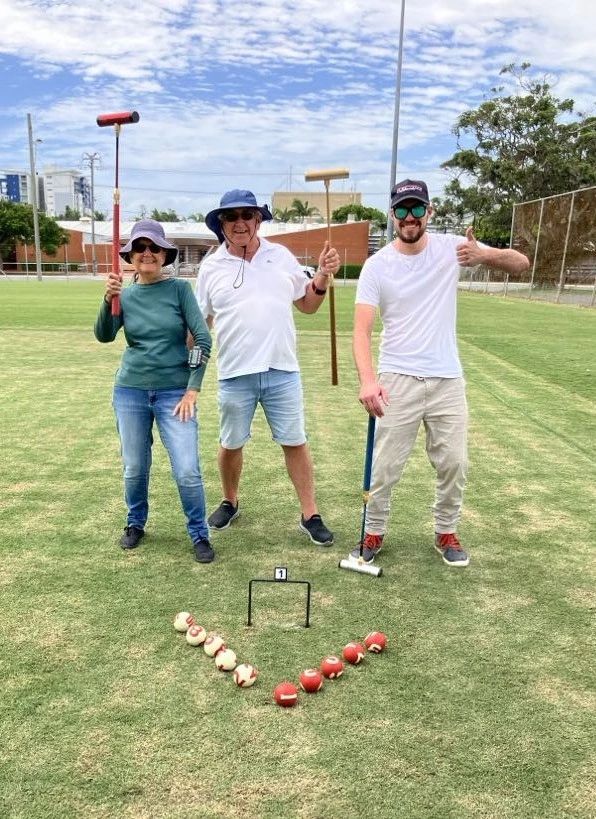
There are mallets, numbered balls and three small gates, and at first glance it could easily be mistaken for croquet. But the game being played opposite Redcliffe Library has its roots in post-war Japan — and Redcliffe has quietly had a club devoted to it for 12 years.
It is called gateball. Local players have taken the sport from Mary Nairn Field to Australian competitions and even a world championship in Brazil, yet plenty of people on the peninsula may still have no idea how the game works.
On Wednesday, 16 September, they can find out for themselves, with a free come-and-try session at Mary Nairn Field giving newcomers a chance to pick up a mallet and discover a sport that has been part of Redcliffe since 2014.
Five Players, Three Gates and Plenty of Tactics
The croquet comparison is understandable. Gateball uses mallets, balls and gates, and the two sports share some ancestry. Once a match gets going, however, gateball has a character of its own.
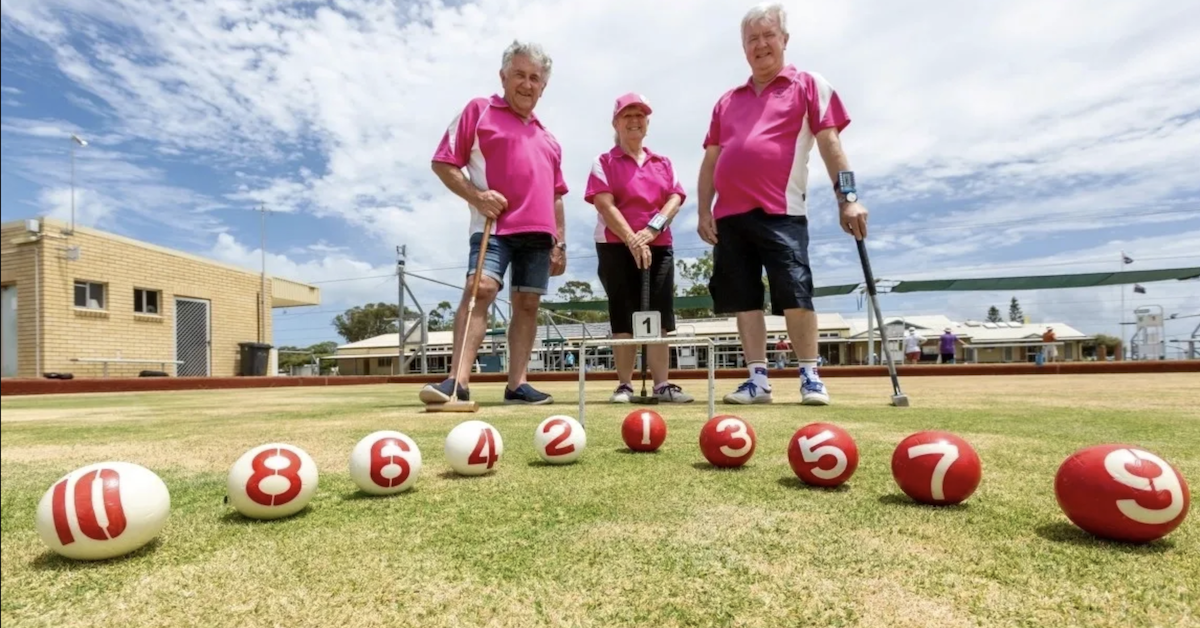
Two teams of five compete on a rectangular 20-metre by 15-metre court. One team plays the odd-numbered red balls and the other the even-numbered white balls, with players taking turns in numerical order.
The court has three gates and a goal pole. Players score a point by sending their ball through each gate in the correct sequence, then two points for hitting the goal pole after completing all three. The team with the most points when the 30-minute match ends wins.
There is another layer to it. Hit another ball and a player can earn an additional play and, in the right circumstances, use a move known as a “spark” to send that ball elsewhere.
That means a well-placed shot can help a teammate, move an opponent out of a dangerous position or change what happens several turns later. It is as much about tactics and positioning as getting a ball through a gate.
In Australia, gateball sits within the Croquet Australia sporting structure, but it is a distinct team game with its own rules, competitions and international governing body.
A Children’s Game From Post-War Japan
The unlikely journey to Redcliffe began nearly 80 years ago in Memuro, on Japan’s northern island of Hokkaido.
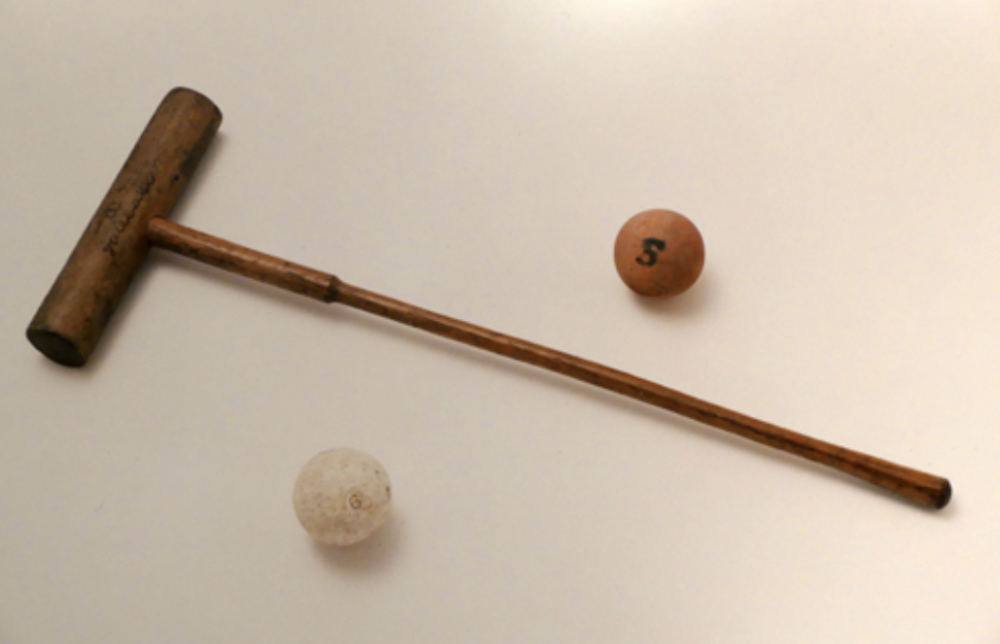
Eiji Suzuki created gateball there in 1947, taking inspiration from croquet at a time when Japan was still dealing with the aftermath of the Second World War.
One of the more surprising parts of its history is who Suzuki had in mind. Despite gateball later becoming associated particularly with older players in parts of Asia, it was originally devised as recreation for children at a time when toys and opportunities for play were scarce.


The game spread across Japan and eventually well beyond it. By 1985, the World Gateball Union had been established, bringing together countries and regions where the sport had taken hold.
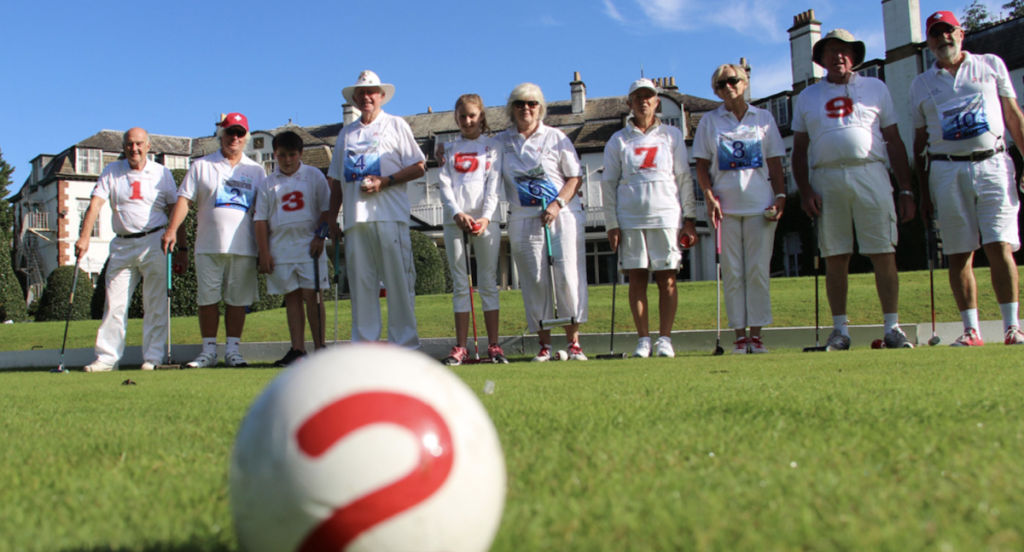
Australia’s documented connection came soon afterwards.


Gateball equipment was presented to then-Sydney mayor Douglas Sutherland during a Japanese promotional visit in 1986. Gateball Australia records the country’s first known game on 14 February 1989, when visiting Japanese players demonstrated the sport at Coogee Croquet Club and Australians joined them.
Australia began competing internationally, held its inaugural Australian Gateball Championships in Sydney in 1999 and joined the World Gateball Union in 2003.
Queensland developed its own competition and clubs in the years that followed, with croquet clubs playing an important role in giving the unfamiliar game somewhere to establish itself.
By 2014, it had a home in Redcliffe.
From Redcliffe to a World Championship
Redcliffe Gateball Club was established that year and remains based at Lot 804 Lamington Drive, opposite Redcliffe Library.
What began locally did not stay local.
In 2018, a Redcliffe team travelled to São Paulo, Brazil, to compete at the World Gateball Championships. Redcliffe recorded a win and a loss on the opening day, including a seven-point victory over a Paraguayan team, before its campaign ended in the group stage.
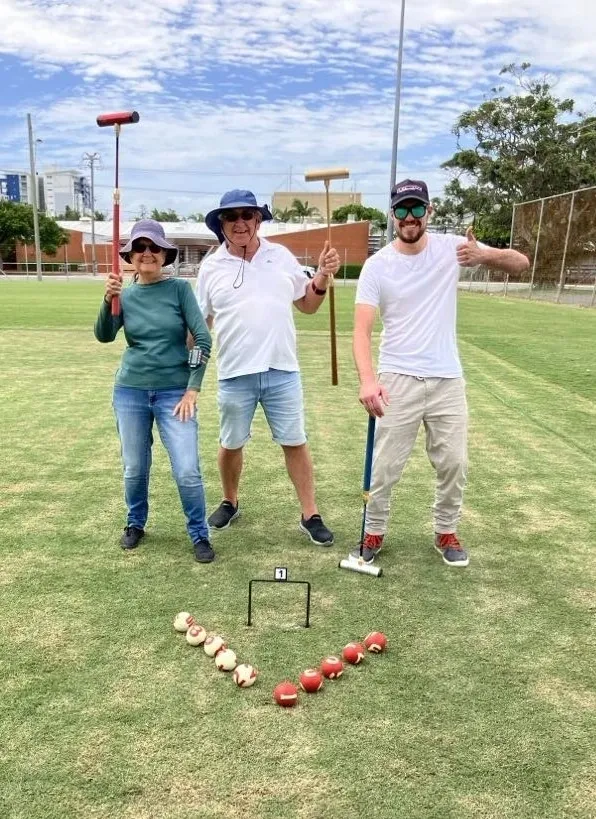
Back home, the stakes are considerably lower.
The club advertises regular Wednesday afternoon and Saturday morning play at its Lamington Drive base, while newcomers have opportunities to try the sport through City of Moreton Bay’s Healthy & Active Moreton program.
The next session will run from 1pm to 3pm on Wednesday, 16 September at Field 3, Mary Nairn Field, Lamington Drive, opposite Redcliffe Library. It is free and open to people aged eight and over, with participants under 18 required to attend with an adult and remain under adult supervision.
Bookings are available through City of Moreton Bay.
Gateball may never have achieved pickleball’s name recognition in Australia. But after 12 years in Redcliffe — and a journey that has taken local players halfway around the world — it is hardly a newcomer to the peninsula.
Published 14-Sept-2026


CLICK ANY LOGO TO SEE PUBLICATION