



IN THE MARKET? – CLICK BELOW FOR OPEN HOMES THIS SATURDAY



Redcliffe waited 131 years for a railway. Ten years ago, it finally arrived.
Queen Victoria was still on the throne when Redcliffe residents began pushing for a railway to the Peninsula.
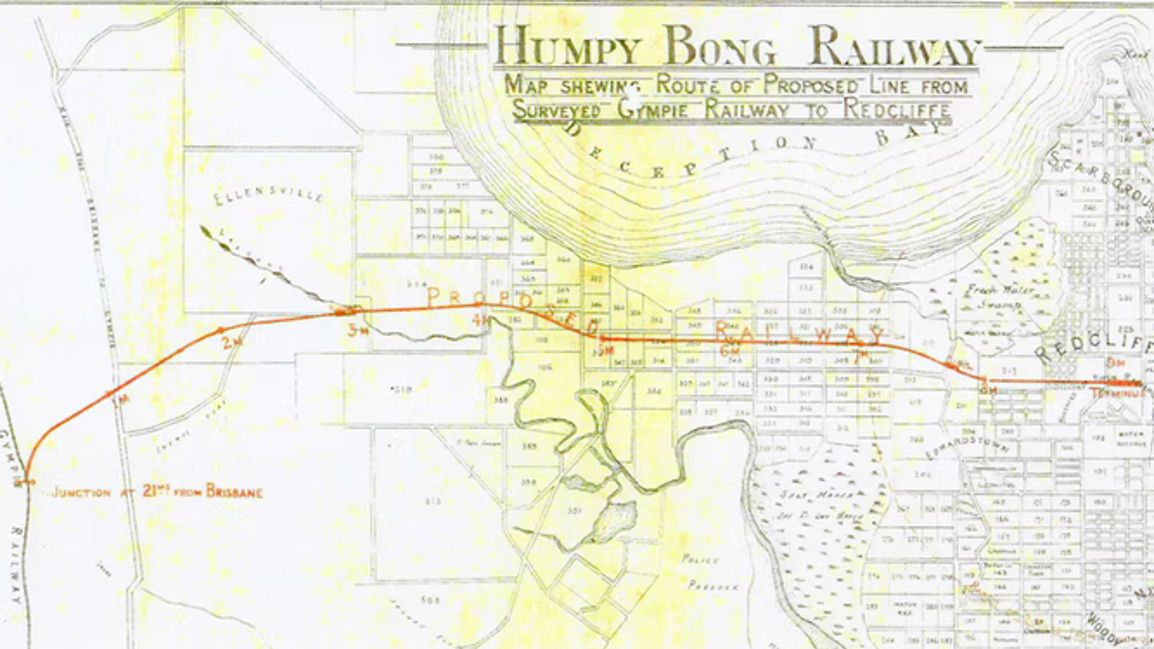
A deputation went to Queensland’s Minister for Works in September 1885 seeking a railway survey. Ten years later, Parliament was considering a £36,000 branch from North Pine — today’s Petrie — to Redcliffe.
It would be another 121 years before passengers could actually board a train at Kippa-Ring.
This October marks 10 years since regular passenger services began on the Redcliffe Peninsula Line, an anniversary Redcliffe Museum will mark on Saturday, 3 October. Behind it is a transport story stretching back 131 years — and, according to some historical records, even a little further.
A Railway for a Town of 700
The organised campaign generally recognised as the beginning of Redcliffe’s railway story dates to 1885, although historical records refer to an earlier request for a railway to Humpybong in 1884.
By 1895, the idea had progressed well beyond local lobbying. Queensland Parliament considered plans for a branch from North Pine to Redcliffe, running 9 miles 69 chains and estimated to cost £36,000.
But approval of plans was not the same as funding a railway.
The proposal required a local financial guarantee, while MPs questioned whether a district with only about 700 residents could support the line. It created a problem that would follow Redcliffe for years: its relatively small population counted against major transport investment, while supporters argued better transport was exactly what the seaside settlement needed to grow.
Other routes followed. One remarkable 1897 proposal approached Redcliffe from the Sandgate side and contemplated crossing Hays Inlet using a pontoon system, with an unusually wide gauge proposed for the exposed section because of concerns about wind and waves.
By 1920, a Public Works Commission was still investigating competing approaches from Petrie and Sandgate.
Redcliffe Found Other Ways to Travel
While railway plans came and went, the Peninsula relied on other connections.


Steamers carried generations of visitors across Moreton Bay, with the Koopa becoming particularly associated with Redcliffe excursions from 1911. Road transport then changed the equation dramatically when the Hornibrook Highway opened in 1935.
Buses linked Redcliffe with Sandgate railway station, effectively extending the rail journey by road. Passengers could even buy combined bus-and-rail tickets.


Still, calls for a railway continued as Redcliffe grew. By 1954, Parliament heard that the city’s population had passed 13,000 and more than 2,000 people were travelling between Redcliffe and Brisbane each day.
The modern railway began taking recognisable shape in the late 1970s. In 1980, Parliament considered a roughly 12-kilometre Petrie-to-Kippa-Ring railway estimated at $19 million, with stations proposed at Kippa-Ring, Rothwell and West Kallangur and provision for another stop.
The railway was not built, but something crucial survived: its corridor. Land was progressively protected for a future line through suburbs that would continue growing around it.
Further investigations followed, including the Petrie to Kippa-Ring Public Transport Corridor study begun in 1999. Its final impact assessment was completed in 2003, with heavy rail identified as the preferred transport mode.
The Project That Finally Reached Kippa-Ring
The decisive breakthrough came in 2010 when the Australian and Queensland governments and Moreton Bay Regional Council reached a funding agreement for what was then called the Moreton Bay Rail Link.
Construction began in 2012. The completed project delivered 12.6 kilometres of electrified dual track from Petrie and six new stations at Kallangur, Murrumba Downs, Mango Hill, Mango Hill East, Rothwell and Kippa-Ring.
The Commonwealth’s completed-project record puts the final cost at about $1.01 billion.
Even then, the Peninsula had one final wait. Problems identified with the signalling system delayed the planned mid-2016 opening while testing and modifications continued around the connection with the existing network at Petrie.
The new railway was officially named the Redcliffe Peninsula Line ahead of its opening.
Thousands turned out for the community and ceremonial opening on 3 October 2016. The following morning, at 3.46am, about 50 passengers boarded the first regular service from Kippa-Ring.
After more than a century of surveys, schemes, studies and campaigns, Redcliffe finally had its train.
When the Extraordinary Became Ordinary
Ten years later, perhaps the most remarkable thing about the railway is how unremarkable catching it has become.
Trains now leave Kippa-Ring throughout the day, stopping at Rothwell, Mango Hill East, Mango Hill, Murrumba Downs and Kallangur before joining the older network at Petrie. A journey that occupied generations of public debate has become somebody’s ordinary trip to work, university, an appointment or home.
Redcliffe Museum will revisit the much longer story on Saturday, 3 October, from 10.30am to noon. Historian Dr Ruth Kerr will discuss the railway’s journey alongside Maxwell Barton OAM, who chaired the later “RAIL 09 – it’s time for the line” campaign.
The event at Redcliffe Museum, 75 Anzac Avenue, is free, with bookings required.
For anyone boarding at Kippa-Ring today, the 12.6 kilometres back to Petrie can feel like just another piece of Brisbane’s suburban rail network.
Getting those tracks to Redcliffe took 131 years.
Published 26-September-2026


CLICK ANY LOGO TO SEE PUBLICATION