



IN THE MARKET? – CLICK BELOW FOR OPEN HOMES THIS SATURDAY



A blue-ringed octopus is probably not what most people expect to find beside one of the busiest boating areas on the Redcliffe Peninsula.
Yet in 2017, a professional fisherman encountered one at Scarborough Harbour while winching a boat at the ramp. It was not the first evidence of the tiny octopus here, either. A published medical case from 2006 involved a child who had been playing in rock pools at a Redcliffe beach and handled a small octopus identified from the circumstances as a blue-ringed species.
Neither record means they are common, or that anyone should go looking for one. What they reveal instead is how much wildlife can remain almost invisible along a coastline surrounded by houses, roads, parks, marinas and thousands of people.
When the Tide Goes Out, Another Redcliffe Appears
At the Peninsula’s southern end, Hays Inlet provides perhaps the clearest glimpse of that other Redcliffe.
Its mangroves, saltmarsh, mudflats and shallow water form part of a 1,205-hectare declared Fish Habitat Area. Sea mullet, bream, flathead, whiting, mud crabs, sand crabs and prawns are among the species supported there, while seagrass grows near the inlet’s mouth.
The wildlife records become more surprising from there. Queensland’s WildNet data include an Indo-Pacific bottlenose dolphin recorded in Hays Inlet in the 1990s, along with historical loggerhead and hawksbill turtle records.
Turtles have appeared much further up the Peninsula too. Loggerhead hatchlings emerged from Queens Beach North at Scarborough in February 2010, only to become disoriented by artificial lighting — an extraordinary event still commemorated through Redcliffe’s Turtle Day.
Visitors That Have Crossed Half the Planet
Some of Redcliffe’s most remarkable wildlife arrives by air.
Hays Inlet records include eastern curlews, red-necked stints, red knots, curlew sandpipers and bar-tailed godwits. For migratory shorebirds, the exposed mud is not empty space but feeding habitat on an international migration route stretching through the East Asian-Australasian Flyway.
Eastern curlews have been recorded repeatedly at Hays Inlet, alongside Australian pied oystercatchers and raptors including eastern ospreys and white-bellied sea-eagles.
That international connection is one reason Hays Inlet forms part of the wider Moreton Bay Ramsar wetland, recognised as being of international importance.
Then there are the animals above suburban Redcliffe itself.


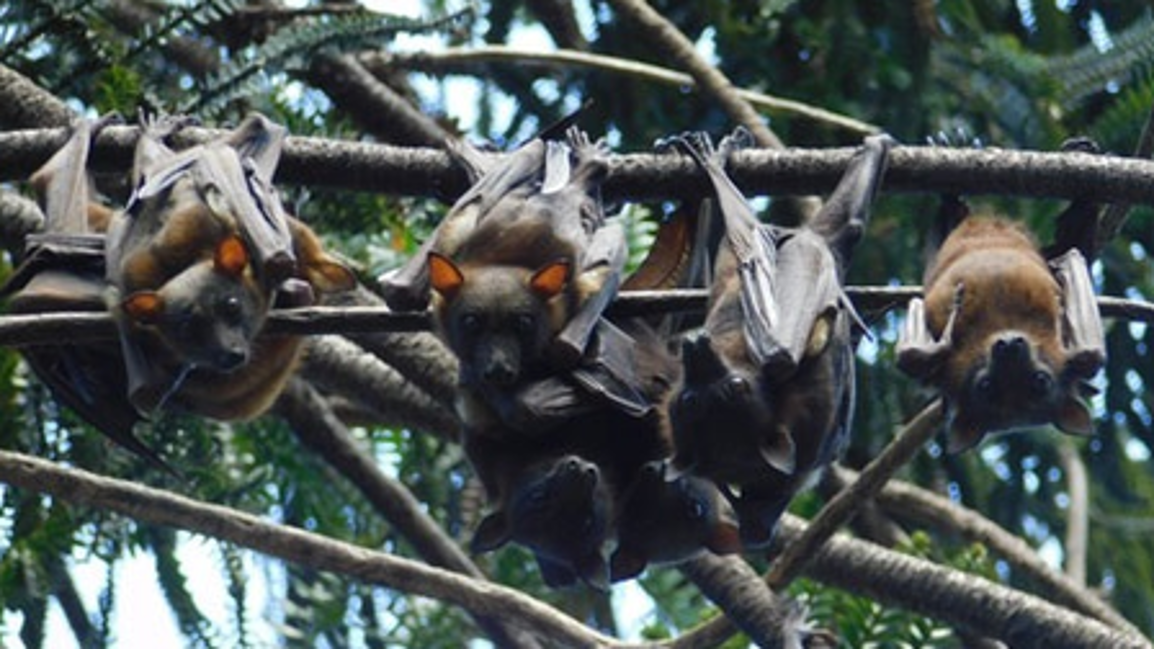
At Redcliffe Botanic Gardens, the City of Moreton Bay counted 2,161 black flying-foxes in August 2026. Earlier in the year the numbers changed dramatically: an April count included 8,500 little red flying-foxes, nomadic visitors whose movements can transform a roost almost overnight.
Koalas remain part of the wider landscape too, including habitat along the Redcliffe Peninsula rail corridor. During construction of what is now the Redcliffe Peninsula Line, 503 koalas were captured and examined across the 13-kilometre corridor between Petrie and Kippa-Ring, with most fitted with telemetry devices and monitored after release.


An Ecosystem Around the City’s Edges
None of this means Redcliffe’s wildlife is untouched by urbanisation. Artificial light can confuse turtle hatchlings, disturbance matters to feeding and roosting shorebirds, and the remaining terrestrial habitat is fragmented.
What survives does so partly because important pieces of habitat remain connected around the Peninsula’s edges. Hays Inlet alone retains extensive mangrove and saltmarsh habitat, while the surrounding Moreton Bay Ramsar system contains seagrass, tidal flats, mangroves and shallow marine environments.
That hidden world is particularly timely this weekend. Redcliffe Museum will host ‘Creepy crawlies and coastal creatures‘ from 10.30am to noon on Sunday, 27 September, with CREEC’s Neil Vaughan exploring Moreton Bay’s seashore wildlife, insects and spiders.
For anyone walking Redcliffe’s foreshore afterwards, the coastline may look a little different. The parks and apartment buildings are still there, but beyond them — and sometimes underneath the nearest rock, above the trees or out on the mud at low tide — another Redcliffe has been there all along.
Published 26-September-2026


CLICK ANY LOGO TO SEE PUBLICATION