

Ten Years of Trains, 131 Years in the Making

Redcliffe waited 131 years for a railway. Ten years ago, it finally arrived.

Queen Victoria was still on the throne when Redcliffe residents began pushing for a railway to the Peninsula.

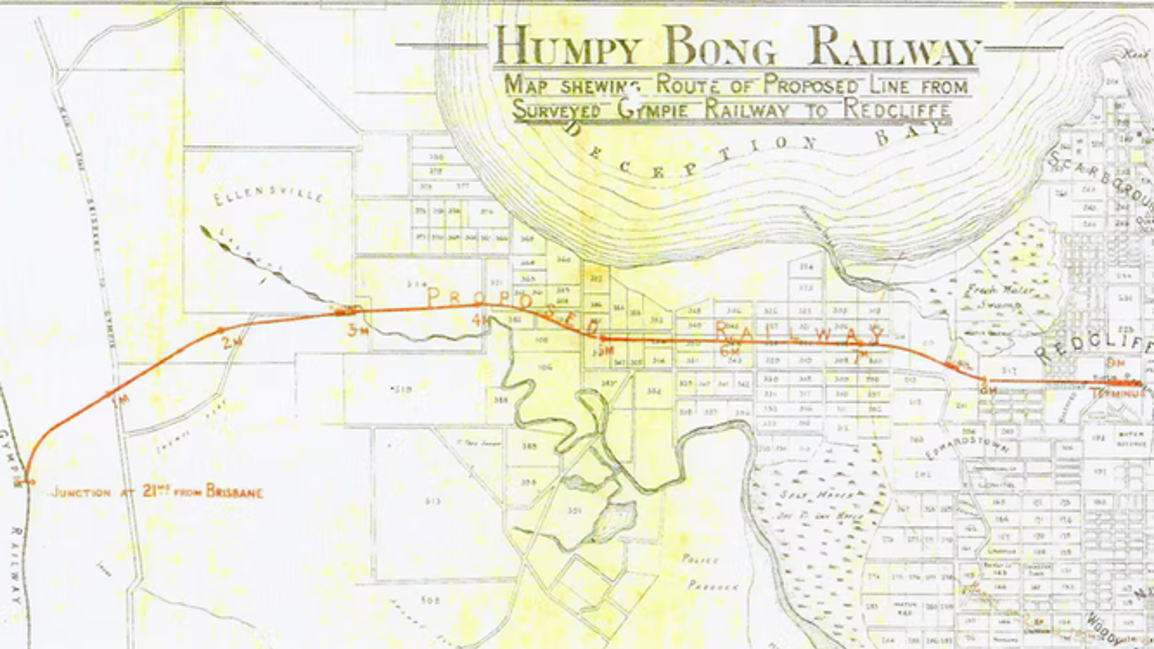
A deputation went to Queensland’s Minister for Works in September 1885 seeking a railway survey. Ten years later, Parliament was considering a £36,000 branch from North Pine — today’s Petrie — to Redcliffe.

It would be another 121 years before passengers could actually board a train at Kippa-Ring.

This October marks 10 years since regular passenger services began on the Redcliffe Peninsula Line, an anniversary Redcliffe Museum will mark on Saturday, 3 October. Behind it is a transport story stretching back 131 years — and, according to some historical records, even a little further.

A Railway for a Town of 700

The organised campaign generally recognised as the beginning of Redcliffe’s railway story dates to 1885, although historical records refer to an earlier request for a railway to Humpybong in 1884.

By 1895, the idea had progressed well beyond local lobbying. Queensland Parliament considered plans for a branch from North Pine to Redcliffe, running 9 miles 69 chains and estimated to cost £36,000.

But approval of plans was not the same as funding a railway.

The proposal required a local financial guarantee, while MPs questioned whether a district with only about 700 residents could support the line. It created a problem that would follow Redcliffe for years: its relatively small population counted against major transport investment, while supporters argued better transport was exactly what the seaside settlement needed to grow.

Other routes followed. One remarkable 1897 proposal approached Redcliffe from the Sandgate side and contemplated crossing Hays Inlet using a pontoon system, with an unusually wide gauge proposed for the exposed section because of concerns about wind and waves.

By 1920, a Public Works Commission was still investigating competing approaches from Petrie and Sandgate.


Redcliffe Found Other Ways to Travel

While railway plans came and went, the Peninsula relied on other connections.

Steamers carried generations of visitors across Moreton Bay, with the Koopa becoming particularly associated with Redcliffe excursions from 1911. Road transport then changed the equation dramatically when the Hornibrook Highway opened in 1935.

Buses linked Redcliffe with Sandgate railway station, effectively extending the rail journey by road. Passengers could even buy combined bus-and-rail tickets.

Still, calls for a railway continued as Redcliffe grew. By 1954, Parliament heard that the city’s population had passed 13,000 and more than 2,000 people were travelling between Redcliffe and Brisbane each day.

The modern railway began taking recognisable shape in the late 1970s. In 1980, Parliament considered a roughly 12-kilometre Petrie-to-Kippa-Ring railway estimated at $19 million, with stations proposed at Kippa-Ring, Rothwell and West Kallangur and provision for another stop.

The railway was not built, but something crucial survived: its corridor. Land was progressively protected for a future line through suburbs that would continue growing around it.

Further investigations followed, including the Petrie to Kippa-Ring Public Transport Corridor study begun in 1999. Its final impact assessment was completed in 2003, with heavy rail identified as the preferred transport mode.

The Project That Finally Reached Kippa-Ring

The decisive breakthrough came in 2010 when the Australian and Queensland governments and Moreton Bay Regional Council reached a funding agreement for what was then called the Moreton Bay Rail Link.

Construction began in 2012. The completed project delivered 12.6 kilometres of electrified dual track from Petrie and six new stations at Kallangur, Murrumba Downs, Mango Hill, Mango Hill East, Rothwell and Kippa-Ring.

The Commonwealth’s completed-project record puts the final cost at about $1.01 billion.

Even then, the Peninsula had one final wait. Problems identified with the signalling system delayed the planned mid-2016 opening while testing and modifications continued around the connection with the existing network at Petrie.

The new railway was officially named the Redcliffe Peninsula Line ahead of its opening.

Thousands turned out for the community and ceremonial opening on 3 October 2016. The following morning, at 3.46am, about 50 passengers boarded the first regular service from Kippa-Ring.

After more than a century of surveys, schemes, studies and campaigns, Redcliffe finally had its train.


When the Extraordinary Became Ordinary

Ten years later, perhaps the most remarkable thing about the railway is how unremarkable catching it has become.

Trains now leave Kippa-Ring throughout the day, stopping at Rothwell, Mango Hill East, Mango Hill, Murrumba Downs and Kallangur before joining the older network at Petrie. A journey that occupied generations of public debate has become somebody’s ordinary trip to work, university, an appointment or home.

Redcliffe Museum will revisit the much longer story on Saturday, 3 October, from 10.30am to noon. Historian Dr Ruth Kerr will discuss the railway’s journey alongside Maxwell Barton OAM, who chaired the later “RAIL 09 – it’s time for the line” campaign.

The event at Redcliffe Museum, 75 Anzac Avenue, is free, with bookings required.

For anyone boarding at Kippa-Ring today, the 12.6 kilometres back to Petrie can feel like just another piece of Brisbane’s suburban rail network.

Getting those tracks to Redcliffe took 131 years.

Published 26-September-2026
150 Years of Humpybong: The School That Grew With Redcliffe

When Humpybong’s first pupils arrived for school on 1 February 1876, their classroom was a small slab-and-bark building near what is now Elizabeth Avenue and Duffield Road.

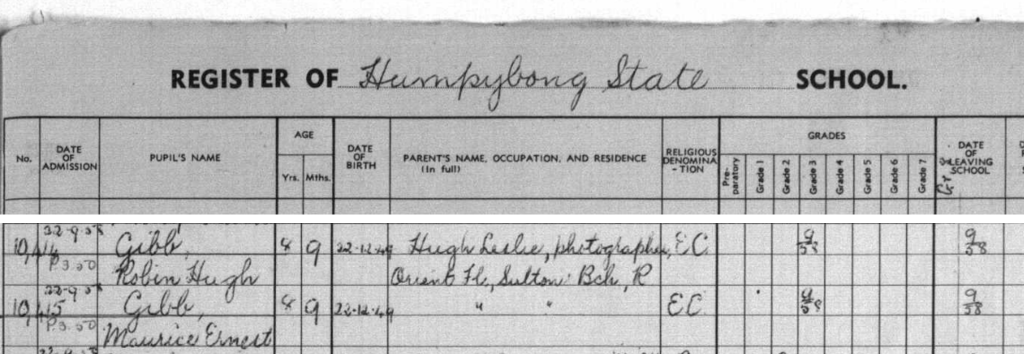
In the 150 years since, the school has moved to Ernest Street, split into separate primary and infants schools and come back together again. Its enrolment eventually climbed to almost 1,000, and among the thousands of children who passed through its classrooms were three brothers named Barry, Robin and Maurice Gibb.

Redcliffe changed just as dramatically around it. Yet one thing survived all those changes: the Humpybong name, inherited from an earlier chapter of the Peninsula’s history and still carried by the school today.

This September, Humpybong State School marks its 150th anniversary.


READ: When Dolly Came to Brisbane: A Local Farewell to a Country Music Legend


The Name Redcliffe Didn’t Erase

Humpybong is an unusual name now, but in the 19th century it was much more familiar locally. City of Moreton Bay historical records associate it with Aboriginal words describing the shelters left behind after the Moreton Bay penal settlement was moved from Redcliffe to the Brisbane River in 1825.

The precise translation is less certain than some popular accounts suggest. Council traces the name to ngumpin, later anglicised as “oopie-bong”, with “humpy” or “oompie” referring to shelter and “bong” presumed to mean vanished.

As Redcliffe became the established name for the Peninsula, Humpybong gradually receded from everyday use. The school kept it, making it one of the most visible reminders of the older place name.

From Elizabeth Avenue to Ernest Street

The original slab-and-bark schoolhouse was replaced by another building nearby in 1878. Three decades later came a much bigger change.

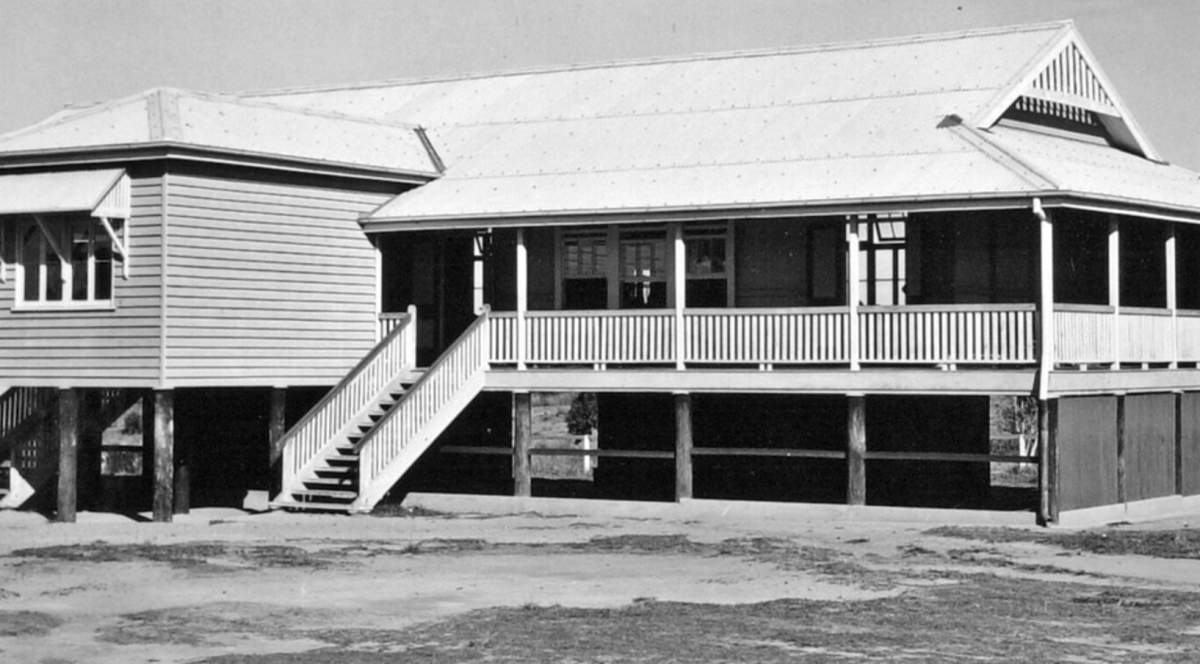
Humpybong Provisional School and the separately operated Redcliffe Provisional School both closed in December 1908. Their pupils came together in March 1909 at a new Humpybong State School in Ernest Street, where the school remains today.

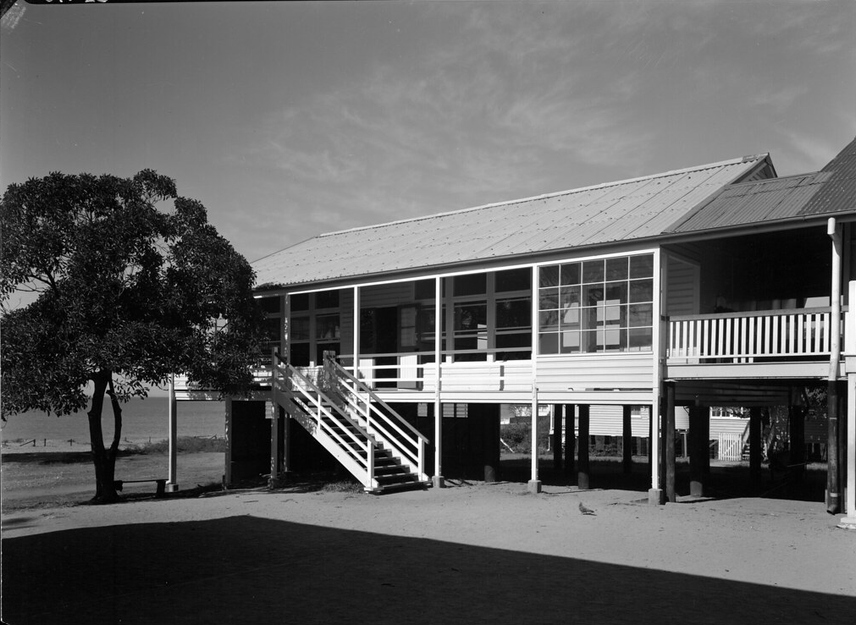
Humpybong State School, 1949.. Photo Credit: Queensland State Archives. Image ID: 3319316

The district around it was changing quickly. The Hornibrook Highway opened in 1935, and post-war growth pushed Redcliffe’s population from 8,871 in 1947 to about 18,000 by 1959.

Humpybong grew with it. A Queensland State Archives photograph records a new classroom in 1952, and in 1959 Humpybong State Infants School opened separately for younger children. The two schools remained separate until they were reunited in 1998.

Nearly 1,000 Pupils by 1999

Official records put Humpybong State School’s enrolment at 992 students in 1999. Today it is considerably smaller, with Department of Education figures recording 464 Prep to Year 6 students in February 2026 and Benjamin Reed as principal.

Those figures bookend one period of a school that has repeatedly changed size and shape as the Peninsula around it changed.


READ: Bells Caravan Park Mural Will Put Clontarf’s Stories on the Wall


A Bell From 1929

One piece of Humpybong’s earlier school life survives at Redcliffe Museum: a school bell dating from 1929. For the anniversary, it is being displayed alongside old uniforms and other memorabilia.

The museum will host an Alumni Stories afternoon from 1pm to 3pm on Saturday 12 September, followed by Humpybong State School History: Then and Now from 10am to noon on Saturday 19 September, looking at changes in classrooms, teaching, transport and school life.

The school’s main birthday celebration takes over Waterfront Oval from 4pm to 8.15pm on Friday 11 September, with performances, fete activities, a bush dance and birthday cake. Entry is free, with an RSVP requested to help organisers plan numbers.

Former students and staff return the following morning for the Humpy Tea Reunion from 9am to 12.30pm, featuring school tours, historical displays, memorabilia and an art show.

The Peninsula outside Humpybong’s gates bears little resemblance to the place where children first walked into a slab-and-bark classroom in 1876. The school has moved and rebuilt, generations have come and gone, but 150 years later the old Humpybong name remains.

Published 7-September-2026

Redcliffe Museum Is Celebrating World Environment Day With a Free Bushfood Workshop

Redcliffe residents have a chance to get hands-on with nature at a free bushfood workshop coming to Redcliffe Museum to mark World Environment Day.


Read: Redcliffe to Host Historic Queensland First Wildlife Exhibition


On Friday 5 June, the Redcliffe Museum will host a special bushfood workshop running from 10.30am to 11.30am. Leading the session is Jay Schieder, a conservation manager from Kumbartcho Nursery who is passionate about native plants and the stories they carry. 

Attendees will learn to identify Australian native bushfood plants, pick up practical tips on growing them at home, and hear about the traditional uses First Nations peoples have made of these plants for food, medicine and everyday life over thousands of years. The session is hands-on, free, and open to all ages, though bookings are required.

While you are there, the museum is also currently hosting the Comedy Wildlife Photography Awards exhibition.

Photo credit: Facebook/City of Moreton Bay

The Redcliffe Museum event is just one of several free activities on offer across the city’s network of environment centres this week, as the council marks both World Environment Day on 5 June and World Oceans Day on 7 June.

At Osprey House, visitors can drop in any time between 9am and 3pm on Friday for guided walks and craft activities. The centre will also host a World Oceans Day event on Sunday 7 June from 10.30am to 11.30am, where participants can explore the challenges facing our oceans, including plastic pollution and sustainability, through a virtual-reality experience.

Over at Kumbartcho Sanctuary, drop-in crafts and guided walks are available on Friday 5 June between 9am and 2pm. Then on Saturday 6 June, the CREEC environment centre will host a Rainforest Reflections session from 10am to noon, taking participants on a forest walk before moving into nature journalling and an art-based reflection activity. All materials are provided.

Photo credit: Google Maps/Redcliffe Museum

Moreton Bay Mayor Peter Flannery said the council’s environment centres offer locals a valuable and accessible way to connect with the region’s natural world. He noted that as the city grows toward a population of one million, protecting the natural environment remains a priority. The council invested $20 million into environmental conservation in 2025-26, alongside a further $1 million toward planning future green infrastructure.

The events are part of a broader commitment from the City of Moreton Bay to environmental stewardship. In recent years, the council completed three annual rounds of its Platypus eDNA Monitoring Project, which detected platypus DNA across all five of the city’s major water catchments. A three-year conservation study also identified 11 sites of the endangered greater glider, a species previously thought to exist in the region only around Upper Caboolture.

Other initiatives include the planting of 3,000 native trees along 100 kilometres of road under the Cool City Streets program, installing vehicle-activated LED signs in koala and kangaroo zones, and diverting 32,000 tonnes of organic material from landfill through the Garden Organics kerbside collection service.


Read: Free Native Plants Now Available in Redcliffe


The council has also adopted a net zero roadmap targeting carbon neutrality for all council operations by 2039, through measures including renewable energy projects and improved building energy efficiency.

With so much on offer across the week, it is a good opportunity for Redcliffe locals to get out, learn something new, and connect with the environment right on their doorstep.

Published 2-June-2026

Redcliffe to Host Historic Queensland First Wildlife Exhibition

Queensland wildlife lovers are set to experience a state first as Redcliffe welcomes a globally acclaimed photography collection designed to blend laugh-loud humour with serious environmental conservation.


A New Way to Look at Conservation

wildlife
Photo Credit: City of Moreton Bay

The City of Moreton Bay is bringing the international Comedy Wildlife Photography Awards exhibition to the local area, marking the very first time these specific images have been displayed anywhere in the state. Locals and visitors can head to the Redcliffe Museum to view 60 selected finalist images captured between 2015 and 2025. 

The collection features amusing moments from the natural world, including cheeky lion cubs, smiling grizzly bears, and flying squirrels, alongside a selection of the competition’s top video entries.

While the photographs are guaranteed to make people laugh, the event organizers want the display to do more than just entertain. The core goal of the project is to use comedy to start real conversations about protecting global biodiversity. According to museum staff, showing animals in these funny, relatable poses helps people feel a stronger sense of empathy toward wildlife by highlighting the shared expressions and behaviours that exist between humans and animals.

Strengthening Local Environmental Efforts

wildlife
Photo Credit: City of Moreton Bay

The arrival of the international collection comes at a time when local leaders are highlighting the region’s own natural assets. Local council officials noted that the exhibition serves as a great reminder of local conservation goals, pointing out that three-quarters of the Moreton Bay area is currently preserved as rural and natural landscapes.

They believe hosting a major cultural event of this scale will bring significant numbers of visitors into the area, boosting local community pride and drawing attention to regional environmental care.


To give families and residents more ways to connect with the theme, the museum has organized a series of free community workshops. A hands-on Wildlife Unleashed session will take place on Saturday 30 May, followed by a Bugs Ed workshop on Saturday 27 June. Local organizers are hoping the funny photographs will inspire residents to look into the region’s existing volunteer conservation programs, such as the local Bushcare groups and Land for Wildlife networks, which allow community members to actively protect native plants and animals in their own backyards.

The entire exhibition is accessible to the public with no admission fees for any age groups. It will be on display at the Redcliffe Museum from 30 May through to 16 August, offering a budget-friendly and educational day out for local families throughout the winter months.

Published Date 20-May-2026

More Than Meets the Eye: Members of Defence Forces Share Stories at ‘Ink in the Lines’

The inked skin of Australia’s veterans tells tales far beyond the tattooed images. Their body art commemorates people, places, and moments that shaped their lives. Now, their stories are shared in the Redcliffe Museum exhibition Ink in the Lines – but the tattoos are just the opening through which broader military experiences and memories emerge.


Read: Two Decades of Making a Difference: Breakfast Club Redcliffe Turns 20


Throughout 2019, the Australian War Memorial captured the stories of Australia’s servicemen and women through interviews and photographic portraits. Many examples from this collection are now displayed in the touring Ink in the Lines exhibition, which can be viewed at the Redcliffe Museum from February 24-May 12.

One who helped launch the exhibit was Rob Douma, an award-winning artist, tattooist, and infantry veteran who deployed to Timor. 

Ink in the lines
Rob (Photo credit: awm.gov.au)

Douma’s own skin bears many tattoos reflecting his travels and experiences, including in the Middle East. One in particular on his forearm displays an Arabic proverb about honesty. 

Douma explained its backstory is that a king would behead liars, but the deeper meaning for him is to live authentically and freely by being true to yourself and others. He felt an affinity with this concept of liberation through truthfulness.

Photo credit: awm.gov.au

Douma’s artistic aptitude led him to open a tattoo studio, complementing his art career. His military background also enriches his tattoo work, as many clients are fellow veterans who open up and share their stories with someone who relates. Douma notes these conversations often go beyond the tattoo to illuminate connections through shared service.

Regarding the exhibition, Douma observes that whilst ostensibly focused on tattoos, it also draws out more expansive personal stories. As he says, the tattoo is just an entry point to tell meaningful tales of military experiences – the real heart of the project. 

Another meaningful tale was that of Bec, a former RAAF linguist who did a life-changing tour in Kandahar, Afghanistan in 2007. As the only Australian embedded with a combined forces group at the massive Kandahar airbase, her deployment alongside allied nations was deeply impactful. 

Ink in the lines
Bec (Photo credit: awm.gov.au)

She explained that for six months, from the moment she woke up to when she went to bed, she was constantly dealing with IEDs, rockets, death, war, Taliban, terrorism and insurgents. It was an unrelenting environment. 

Ink in the lines
Photo credit: awm.gov.au

To honour this life-changing experience, Bec got a tattoo of the word “Kandahar” in Arabic – representing the place that so transformed her life and service. 


Read: From Redcliffe Markets to ‘The Voice’: Levi X’s Musical Ascendancy


To hear more of these moving stories and view the body art that inspired them, visit the Ink in the Lines exhibition at the Redcliffe Museum, Wednesday to Friday, 10:00 a.m. – 4:00 p.m. and on weekends, 10:00 a.m. – 3:00 p.m until May 2024. 

Those moved by the stories can also participate by taking photos of their own commemorative or military tattoos and sharing them on social media with the hashtag #InkintheLines. 

Published 22-February-2024 

You’re Invited to ‘Utopia! And the Caravan Calamity’ at the Redcliffe Museum

Save the date and book some seats! On the 15th of May 2021, Observatory Theatre’s all-new production “Utopia! And the Caravan Calamity” will be played at Redcliffe Museum. The best part? It’s all free! 


Featuring a curious combination of tap dancing, interactive performers, gypsy jazz music, slapstick comedy, and dramatic eye-popping visuals, “Utopia! And the Caravan Calamity” aims to take full advantage of Redcliffe Museum’s new steampunk-themed exhibit, aptly titled “Brain Child”, which celebrates outlandish inventions and sheer imagination. 

Co-director Rory Cooper remarks that the world created within the show offers a heart-warming story of mateship and cooperation that will immerse the audience and rope them into the experience. 

“Audiences should expect to be immediately immersed into the world as some very skilled and enthusiastic actors embark on this journey,” says Mr Cooper. “The performance will take audiences on an adventure that is fun for the whole family.”

The story follows a group of oddballs on a faraway planet traveling aboard a rickety caravan towards paradise. Things don’t go as planned as the caravan collapses en route and the group is left stranded in a desolate wasteland. The only way out is to work together.

Photo credit: Observatory Theatre

Observatory Theatre director Lachlan Driscoll and choreographer Kara Fisher created “Utopia! And the Caravan Calamity.” The production also features set design by The Black Box Collective. 

Book a free ticket for the show on the 15th of May 2021 by visiting this website. The performance will run from 10:30 a.m. to 11:15 a.m.

Observatory Theatre is an up-and-coming theatre company that aims to create meaningful and vibrant experiences for the audience in ways that conventional theatres do not. They specialise in transporting the audience into the world of their productions, making for interactive and immersive experiences that bend the boundaries of traditional theatre. To learn more about Observatory Theatre, visit their website here. Follow their social media accounts on Facebook and Instagram for the latest updates on deals, dates, events, and other special announcements concerning their productions.

Redcliffe Museum is at 75 Anzac Ave, Redcliffe.