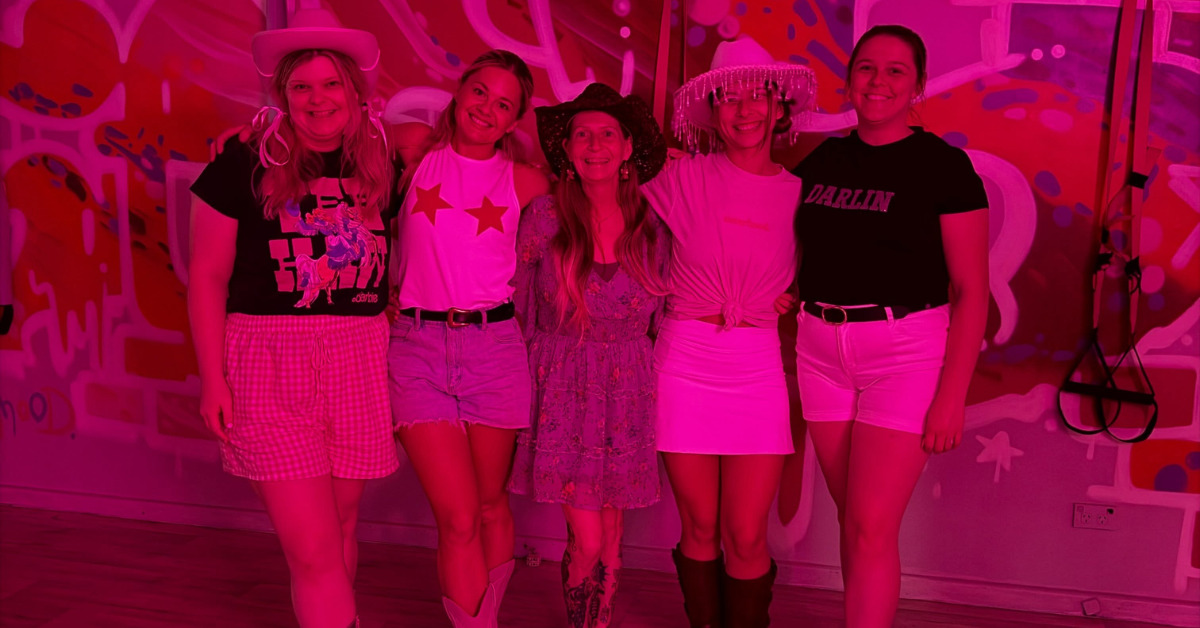
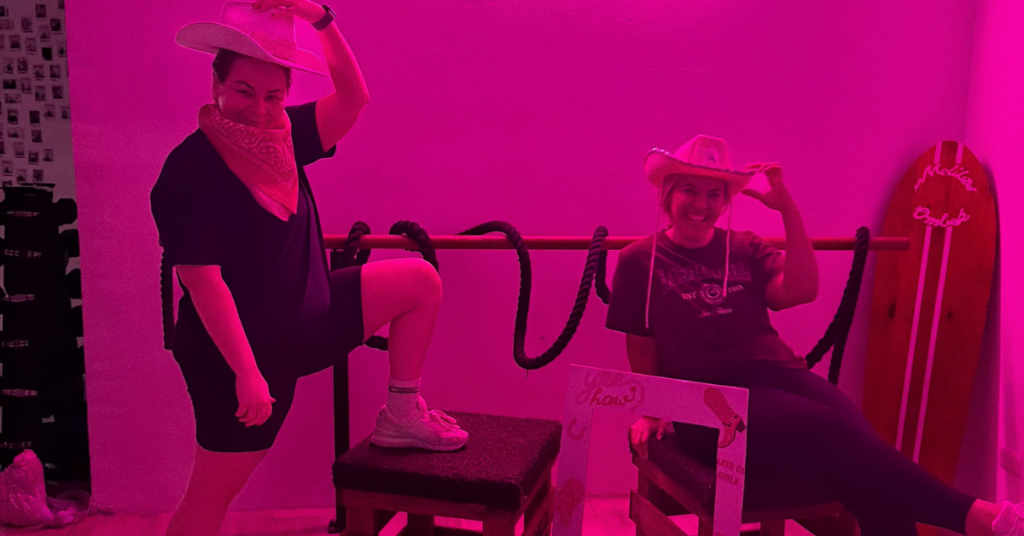
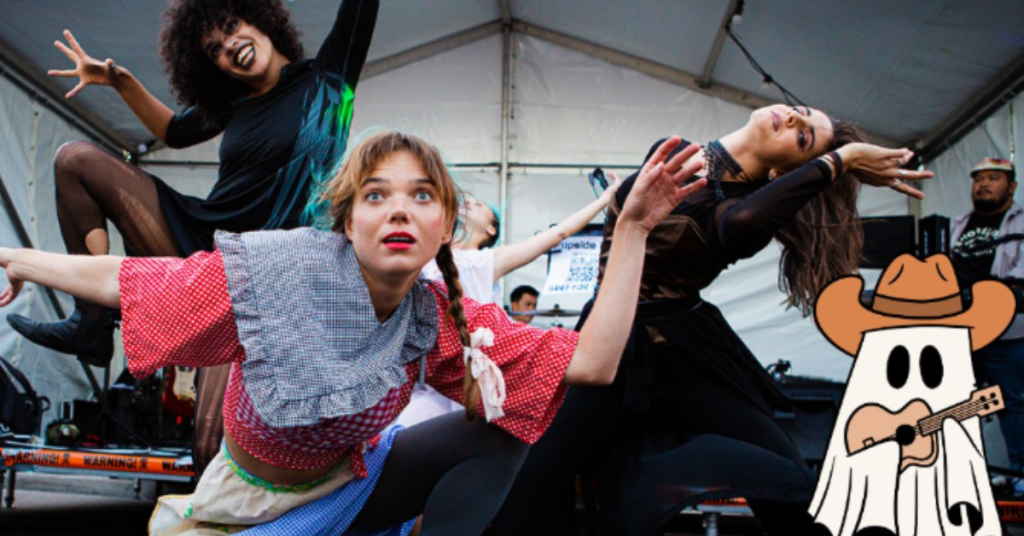
Redcliffe locals curious about line dancing have an easy way in, with The Active Sisters hosting a no-experience, no-partner country night at the showgrounds.
Picture an hour of country tunes, a bigger floor than a fitness studio can offer and a room full of people learning the same moves together. That is the plan for Boots & Boogie, set for Saturday, 24 October, from 6 p.m. to 7 p.m. at Webb Hall, Redcliffe Showgrounds. Tickets are $27.78, according to the event listing.
Each routine is taught in small, easy steps, so newcomers can keep up without feeling lost. The session ends with a group dance that pulls everything together.
Come as You Are
Mistakes are part of the fun, according to Sami Fisher, owner of The Active Sisters. She told Moreton Daily that guests do not need to know the steps, bring a dance partner or nail every move. Laughing along and trying something new matters more.
The night is open to friends, couples and work crews, and men are welcome. Dress-ups are encouraged, so boots, denim and cowboy hats will fit right in.
The idea grew from the group’s first line dancing classes in Margate. Moreton Daily reported in August that the classes ran as a four-week series for beginners and experienced dancers, in a studio built around women’s fitness. Fisher said the response surprised the team, and that it was lovely to see women gather, laugh and try something different. That reaction convinced the group to take the dancing out into the wider community.
Boots, Brews & Boogie follows on Saturday, 7 November, from 6 p.m. at Buddy Brewing, 178 Station Road, Burpengary. Beginner-friendly line dancing meets a relaxed brewery setting, and Moreton Daily reported that guests receive a complimentary drink on arrival. Anyone wanting to know about age limits or drink choices should check with the venue or organisers. Like the Redcliffe night, it needs no partner and no experience.
Tickets for both nights were available at the time of writing.
Work is underway on a major wastewater upgrade in Kippa-Ring, while a separate testing programme across the Redcliffe Peninsula is helping Unitywater identify faults that can put extra pressure on the sewerage network during heavy rain.
Residents across the Redcliffe Peninsula may see two different types of wastewater work taking place over the coming months. One involves new pipes and improvements to a pumping station on Hercules Road in Kippa-Ring. The other uses artificial smoke to find faults in sewer pipes and private plumbing connections that can allow rainwater into the wastewater system.
Although the projects are separate, both form part of Unitywater’s efforts to maintain reliable services as established neighbourhoods age and new developments add to demand.
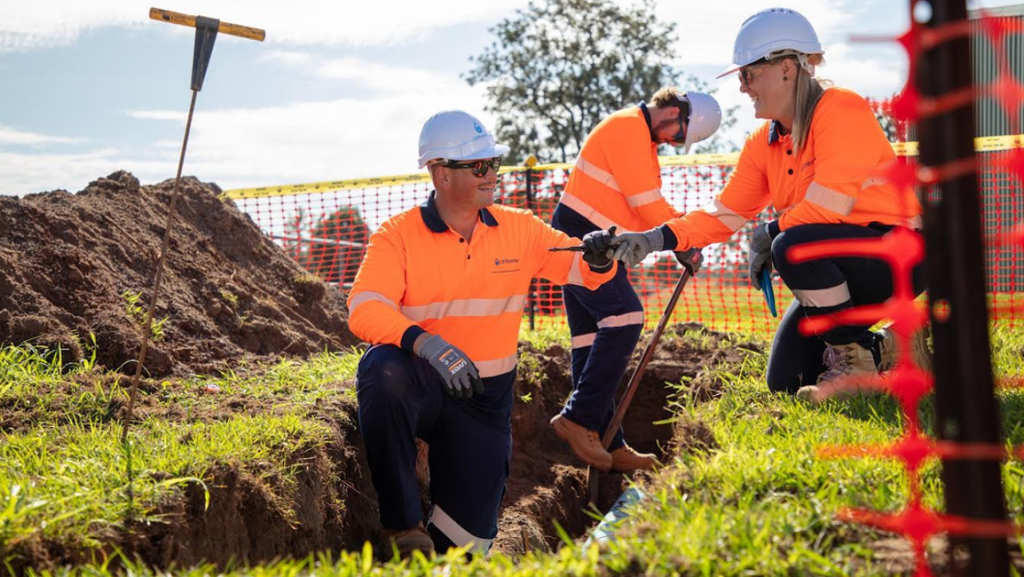
At Hercules Road, the utility is upgrading an existing gravity wastewater main and pump station, installing approximately 400 metres of new pipe and constructing new maintenance holes.
The improvements are intended to support new developments in Kippa-Ring, Newport, Rothwell and Morayfield South.
Unitywater Executive Manager Sustainable Infrastructure Solutions Mike Basterfield said the project was among several upgrades being delivered across Moreton Bay.
“The works also include an upgrade to the gravity wastewater main and pump station on Hercules Road, including 400 metres of new pipe and new maintenance holes. This upgrade will support new developments in Newport, Rothwell, Kippa Ring and Morayfield South,” he said.
Construction on the first stages of the wider wastewater upgrade programme began in September 2026, with work continuing across different locations until June 2027.
When Rainwater Finds Its Way into Sewer Pipes
While the Hercules Road project focuses on upgrading infrastructure, Unitywater’s smoke-testing programme is designed to identify problems in the existing wastewater network.
During heavy rainfall, stormwater can enter sewer pipes through damaged infrastructure, faulty connections or incorrectly connected drainage. That additional water can overwhelm parts of a system designed primarily to carry wastewater from homes and businesses.
Photo credit: Supplied
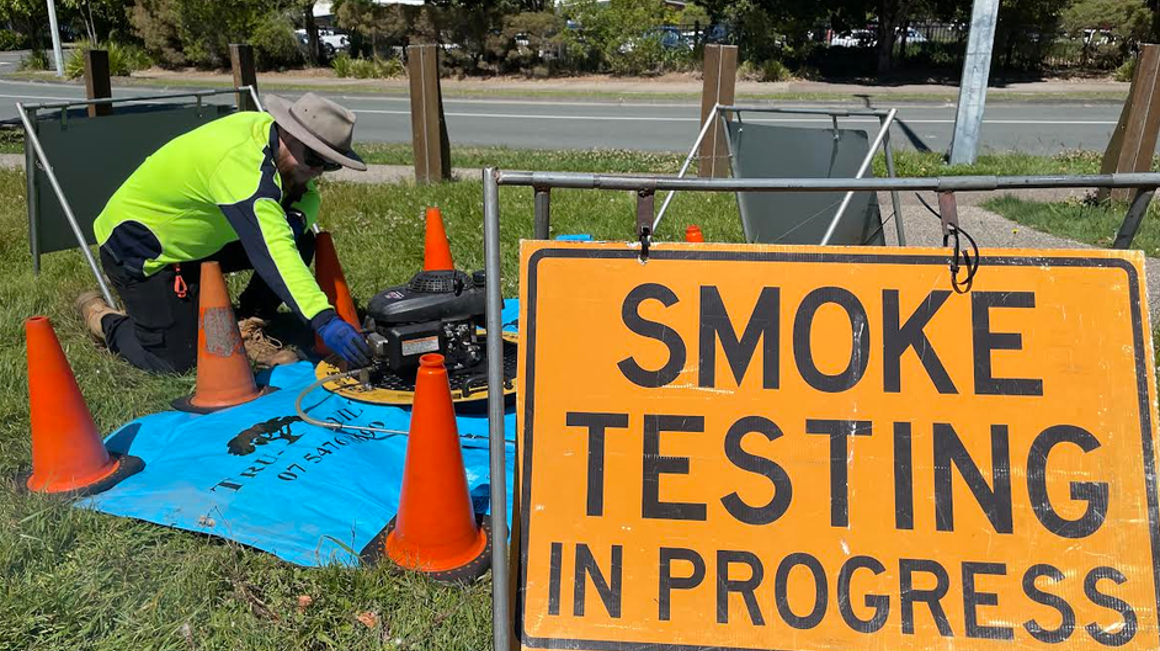
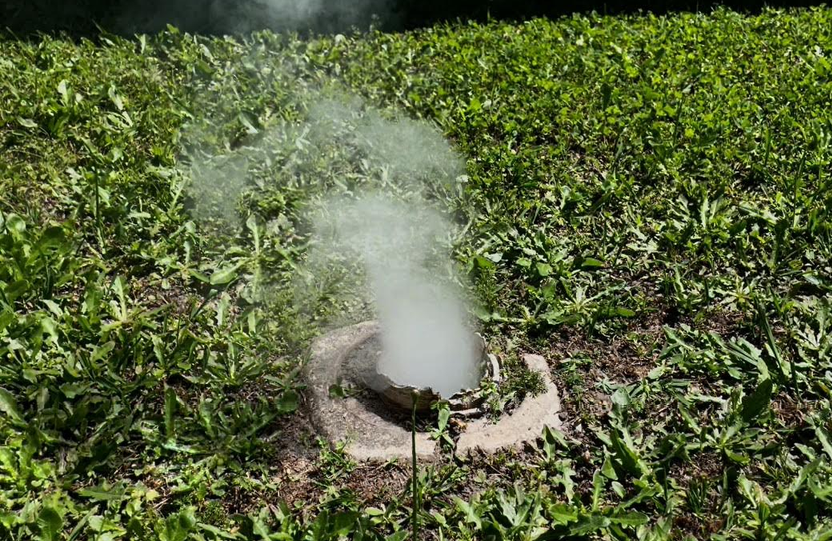
To find potential entry points, crews introduce non-toxic artificial smoke into sections of the sewer network. Where smoke escapes through a damaged pipe, faulty fitting or other opening, it can indicate a location requiring further investigation.
Unitywater announced on 12 October that its annual testing programme was underway across Moreton Bay, including Kippa-Ring, Rothwell, Redcliffe, Margate, Clontarf, Scarborough and Woody Point.
According to Unitywater, approximately 4,000 defects in private plumbing connections have been identified across Moreton Bay over the past five years, with 85 per cent rectified.
Mr Basterfield said the repairs had helped reduce the amount of stormwater entering the wastewater network.
“Across Moreton Bay 85% of these defects have been rectified, which has reduced stormwater inflow by 24%, which reduces the likelihood, frequency and volume of overflows occurring,” he said.
The figures relate to the wider Moreton Bay testing and rectification programme, rather than to Kippa-Ring or the Redcliffe Peninsula alone.
What Happens if Smoke Testing Finds a Problem?
The smoke-testing programme has already uncovered thousands of plumbing faults across Moreton Bay, many of which property owners may not have known existed.
According to Unitywater, approximately 4,000 defects in private plumbing connections have been identified during the programme’s first five years. These include incorrectly installed or poorly maintained overflow relief gullies, which are designed to prevent sewage backing up inside buildings, and downpipes illegally connected to the wastewater system.
About 85 per cent of those defects have since been rectified, contributing to a reported 24 per cent reduction in stormwater entering the wastewater network across Moreton Bay.
The investigations extend beyond household plumbing. During the last financial year, Unitywater inspected 14,600 maintenance holes, looking for problems such as loose covers and tree roots that can cause blockages or allow stormwater into sewer pipes.
For residents in Clontarf, Kippa-Ring, Margate, Redcliffe, Rothwell, Scarborough and Woody Point, smoke testing will continue over the coming 12 months.
Photo credit: Supplied
The artificial smoke is safe, non-toxic and non-staining. It is introduced into wastewater pipes and becomes visible where it escapes through vents, cracks or faulty connections, helping crews identify locations that may need further investigation.
Residents do not need to be home during testing and can expect a letter in their mailbox approximately two weeks before crews arrive.
If a fault is identified in private plumbing, Unitywater says it will ask the customer to take reasonable steps to have the problem rectified.
The testing is particularly important during heavy rainfall, when excess stormwater entering sewer pipes can increase the risk of wastewater overflowing onto private properties or into the surrounding environment.
For residents, the distinction matters. The Hercules Road project involves construction to improve wastewater infrastructure, while smoke testing is an inspection process that may identify problems in existing pipes or private plumbing.
Unitywater says properties selected for smoke testing will generally receive at least 14 days’ advance notice. The testing does not require access inside homes and is not expected to interrupt wastewater services.
The utility has not provided specific traffic arrangements or a separate completion date for the Hercules Road construction in its latest announcement. Its delivery partner, Abergeldie, is undertaking the wider upgrade works, which are expected to finish in June 2027.
Unitywater’s broader five-year infrastructure programme involves $2 billion in water and wastewater investment across Moreton Bay, the Sunshine Coast and Noosa. That is a region-wide commitment, not the cost of the Kippa-Ring project.
As the peninsula accommodates further development, the two programmes illustrate the work involved in maintaining the network from different directions: adding capacity where it is needed while finding faults that can undermine the performance of infrastructure already in the ground.
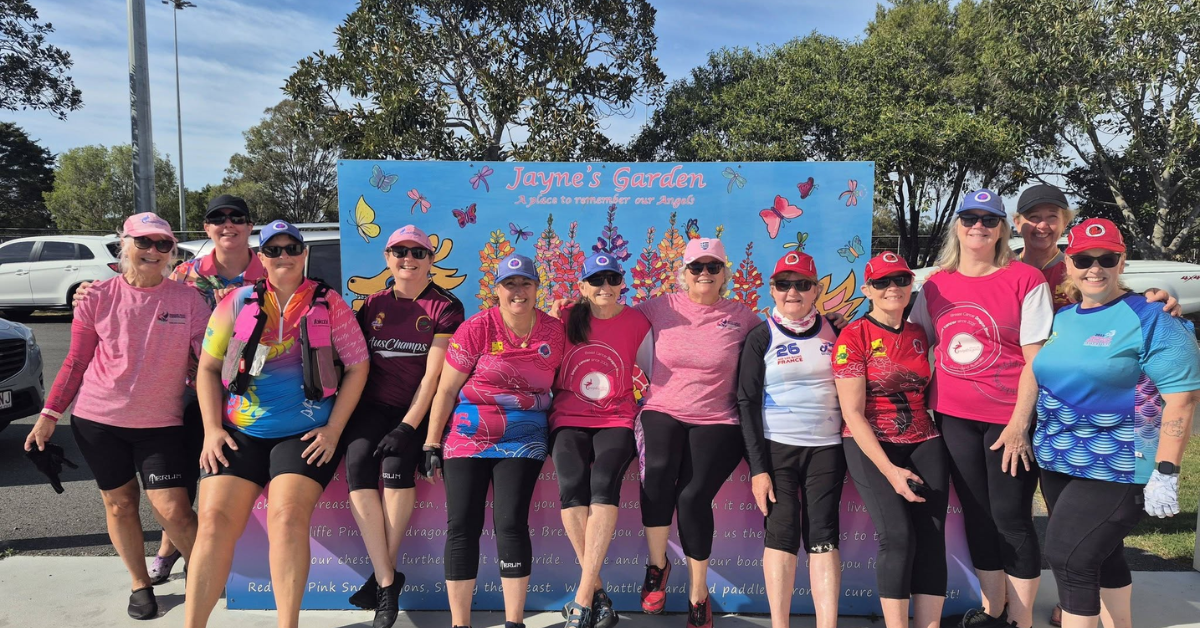
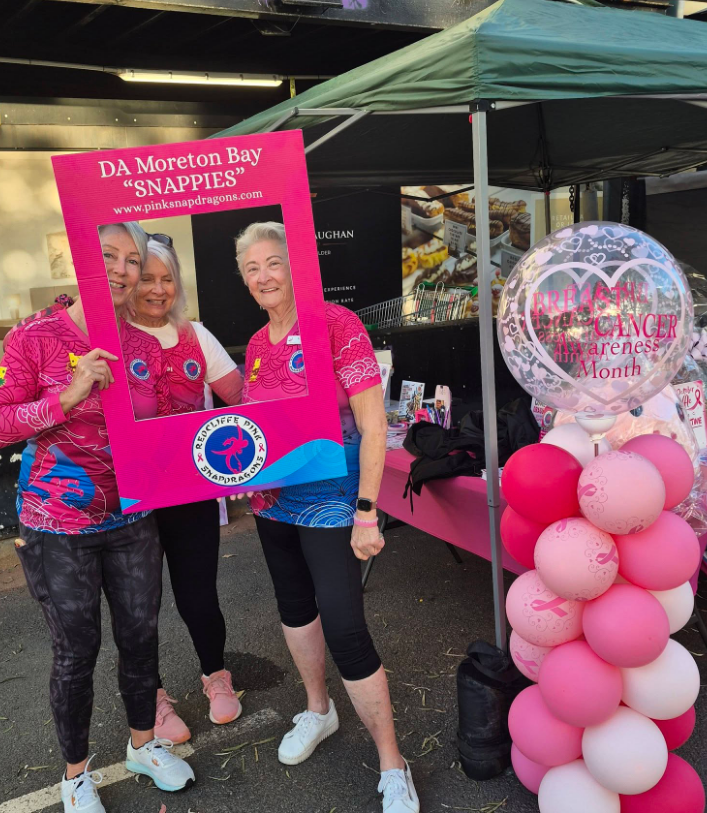
Redcliffe Pink Snapdragons are making room for new paddlers in Kippa-Ring, inviting breast cancer survivors and supporters to experience dragon boating as the club marks Breast Cancer Awareness Month.
The free Come and Try Morning will take place on Saturday, 17 October, from 9 a.m. to 11 a.m. at the Paddling Den in Talobilla Park. People currently undergoing breast cancer treatment, those living beyond the disease and supporters are welcome, with no previous paddling experience or particular fitness level required.
Paddles and life jackets are provided by the club, while morning tea afterwards will allow newcomers to meet the existing crew. Registration is essential.
Founded in 2005, the Redcliffe Pink Snapdragons have spent more than two decades bringing breast cancer survivors and supporters together through dragon boating on Moreton Bay. The not-for-profit club attracts members from across the Redcliffe Peninsula and surrounding areas, with twice-weekly training sessions and participation in regattas and awareness activities. It is part of the national Dragons Abreast Australia network, where the group is known as DA Moreton Bay.
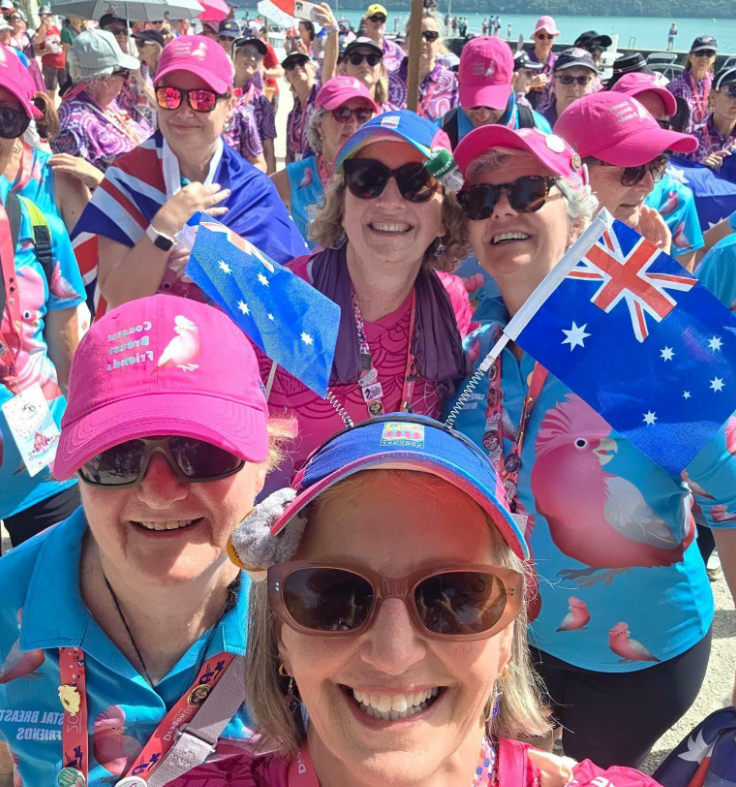
The club describes paddling as a way for members to rebuild confidence, maintain physical activity and develop friendships with others affected by breast cancer. Members are encouraged to participate at their own pace, whether through social paddling or training for competitions. Five members recently took their paddling experience overseas, joining thousands of others at the 2026 International Breast Cancer Paddlers’ Commission Participatory Dragon Boat Festival in Aix-les-Bains, France.
Lisa and Sonia paddled with Coastal Breast BCS Team 73, Anne joined Coastal Breast Supporter Team 6, while Jhana and Michelle were part of Dragons Abreast Australia’s Team Unity 104. The non-competitive festival brought together around 4,500 breast cancer paddlers and supporters from 25 countries. The Redcliffe members’ participation followed two years of planning, training and fundraising.
From Moreton Bay To The Next Big Paddle
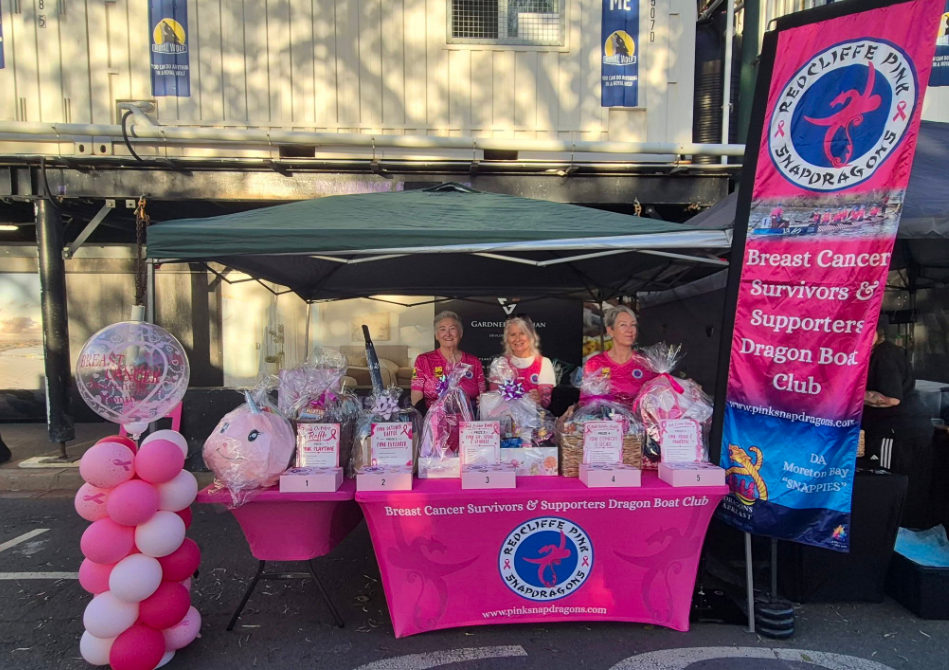
Closer to home, the club’s October activities began with a fundraising and awareness stall at Redcliffe Markets on 4 October. A Pink October raffle will also be drawn on Saturday, 24 October, with five major prizes and tickets available at three for $5, seven for $10 or 15 for $20.
The same day, the Pink Snapdragons and Redcliffe Red Dragons are planning a Sunset Paddle from 6 p.m. through Newport’s canals, with a possible extension into Moreton Bay. The paddle and accompanying Pink October BBQ are restricted to members and families, with the combined event listed from 5:30 p.m. to 9 p.m. and tickets priced at $5.
The club is also working towards sending a breast cancer survivor team to the Australian Dragon Boat Championships in Adelaide in April 2027, followed by a longer-term goal of participating in the 2030 international festival in Singapore.
Fundraising and sponsorship are being sought to support those plans, including financial contributions, equipment, services and assistance with travel and accommodation. Club and participation enquiries can be directed to info@pinksnapdragons.com or Jhana on 0417 716 544.
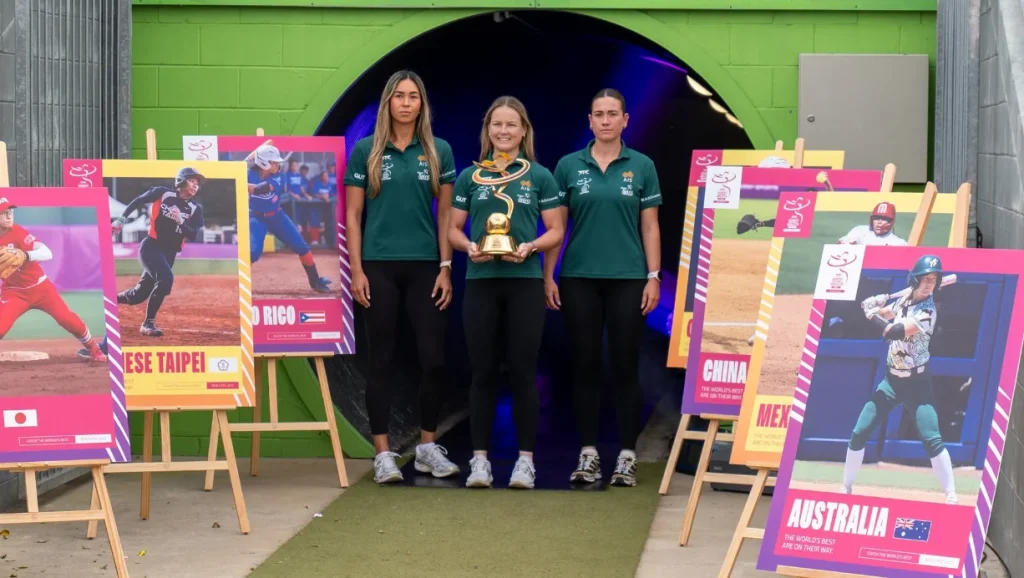
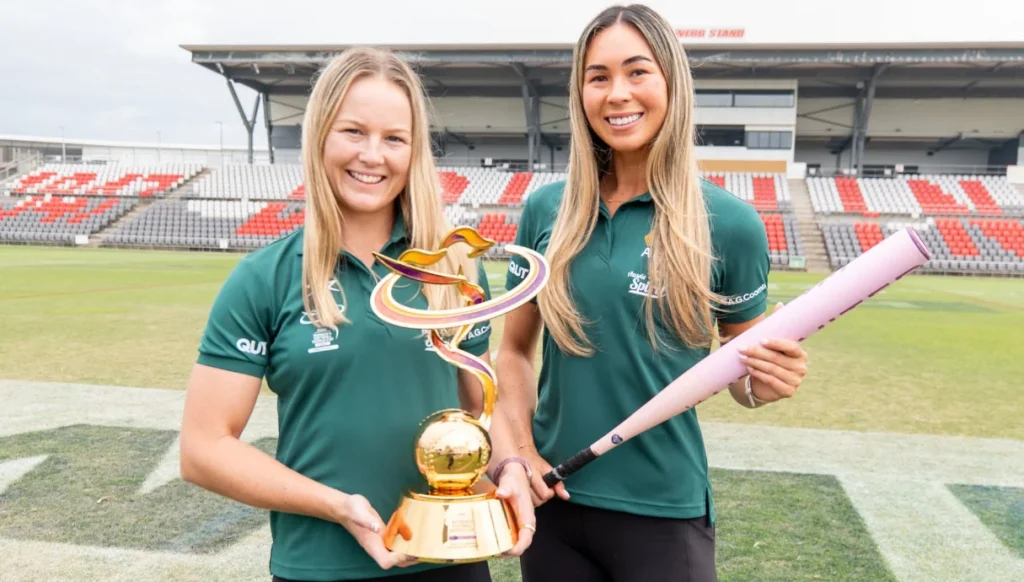
A 24-karat gold-plated World Cup trophy has arrived at Kayo Stadium, giving Redcliffe an early glimpse of the international softball tournament that will transform the Dolphins’ home ground next April.
The WBSC Women’s Softball World Cup Finals will bring eight nations to Moreton Bay from 5 to 10 April 2027, with Australia’s Aussie Spirit facing Japan, the United States, Canada, Chinese Taipei, Puerto Rico, Mexico and China. The tournament will be the first Women’s Softball World Cup staged in Australia since the inaugural event in 1965.
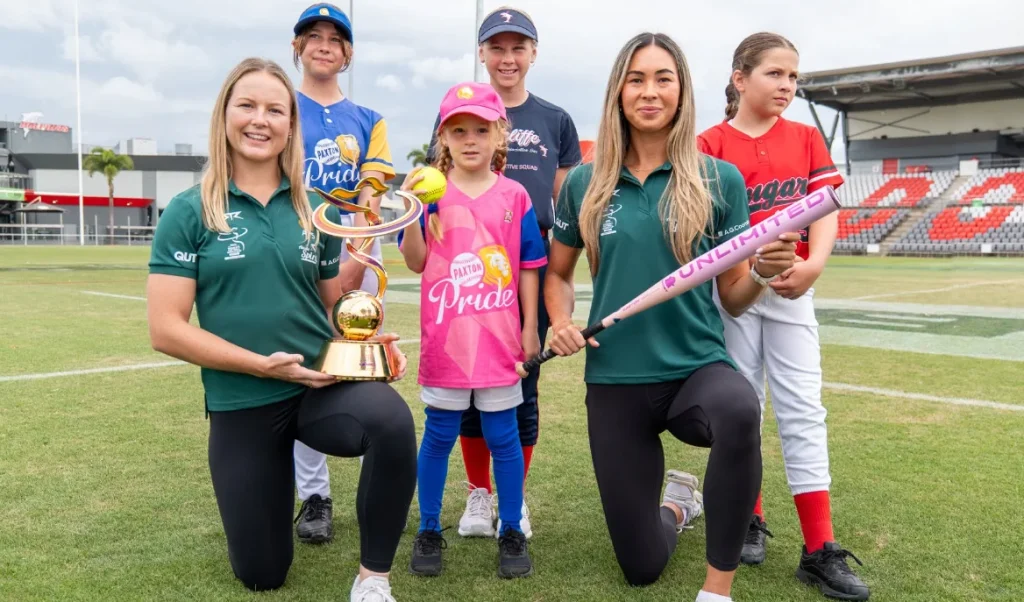
The trophy was unveiled at Kayo Stadium on Tuesday, 7 October, in front of current and former Australian players, local junior softballers and government and sporting representatives. Made in Italy from gold-plated brass, it will return to the same venue in April to be presented to the 2027 world champions.
Kayo Stadium will undergo an unusual sporting conversion for the six-day tournament, with the NRL ground to be turned into an international softball diamond. The change puts a global event in a venue better known as the Dolphins’ home base, while nearby Talobilla Park will remain part of tournament operations as a warm-up facility. The park had originally been earmarked to host the World Cup before the event was shifted to Kayo Stadium.
Mr Peter Flannery has described the tournament as the biggest sporting event the city has hosted. Visiting teams, supporters and officials are expected to bring activity beyond the stadium, with organisers and government representatives forecasting more than $3.65 million flowing into the Queensland economy and benefits for tourism operators, businesses and local jobs.
Photo Credit: City of Moreton Bay/Facebook
Organisers are also chasing a benchmark inside the ground. Softball Australia hopes a crowd of 10,000 for a match could establish a new attendance record for the tournament. Australia will have more than a world title at stake. The Redcliffe finals are the first qualifying event for softball at the Los Angeles 2028 Olympics, where five teams will join host nation the United States.
Redcliffe Hosts While 2032 Venue Hunt Continues
The tournament also arrives while softball and baseball pursue places on the Brisbane 2032 Olympic program, with the question of where the two sports could be staged still unresolved. Kayo Stadium can accommodate an international softball field but does not have enough playing space for baseball. The Gabba is expected to be used for cricket in 2032, while the Brisbane Showgrounds has been ruled out as an option because of security requirements around the adjacent athletes’ village.
Photo Credit: City of Moreton Bay/Facebook
Mr Tim Mander has said another potential site has been identified, but neither the government nor Baseball Australia has disclosed its location. Baseball Australia has indicated several venue solutions could be presented to Brisbane 2032 organisers.
A separate proposal has emerged in Logan for a privately funded, purpose-built ballpark at Griffith University, although Mander said it was not yet part of Brisbane 2032 planning. Redcliffe will get the first test much sooner. General public tickets for the 2027 Women’s Softball World Cup Finals go on sale from 1pm AEST on Thursday, 8 October, ahead of Kayo Stadium’s switch from rugby league field to World Cup diamond next April.
Redcliffe families can wander past stilt walkers, roaming fairies and gourmet street food for free when Redcliffe Markets brings the Festival of Frights back to Redcliffe Parade.
Tickets cost nothing. The event will take place on 31 October, guests who register for one are entered into a draw for a prize.
Market stalls will be stocked with treats for the night. Organisers say the street food comes from some of South East Queensland’s best gourmet vendors, so a stroll through the stalls doubles as dinner.
Spooky stilt walkers and fairies will roam through the markets, mingling with visitors as they browse. Live entertainment with a creepy edge rounds out the program.
Children get a scavenger hunt of their own. Costume fans have the Best Dressed Competition, which organisers describe as a crowd favourite.
Organisers are billing this year’s festival as bigger than before. Redcliffe Markets presents the night at Redcliffe Parade, and ghosts, ghouls and spirits are all invited along.
After four years of building works and changing spaces around the campus, Woody Point Special School is preparing to hand one of its newest areas over to the students themselves.
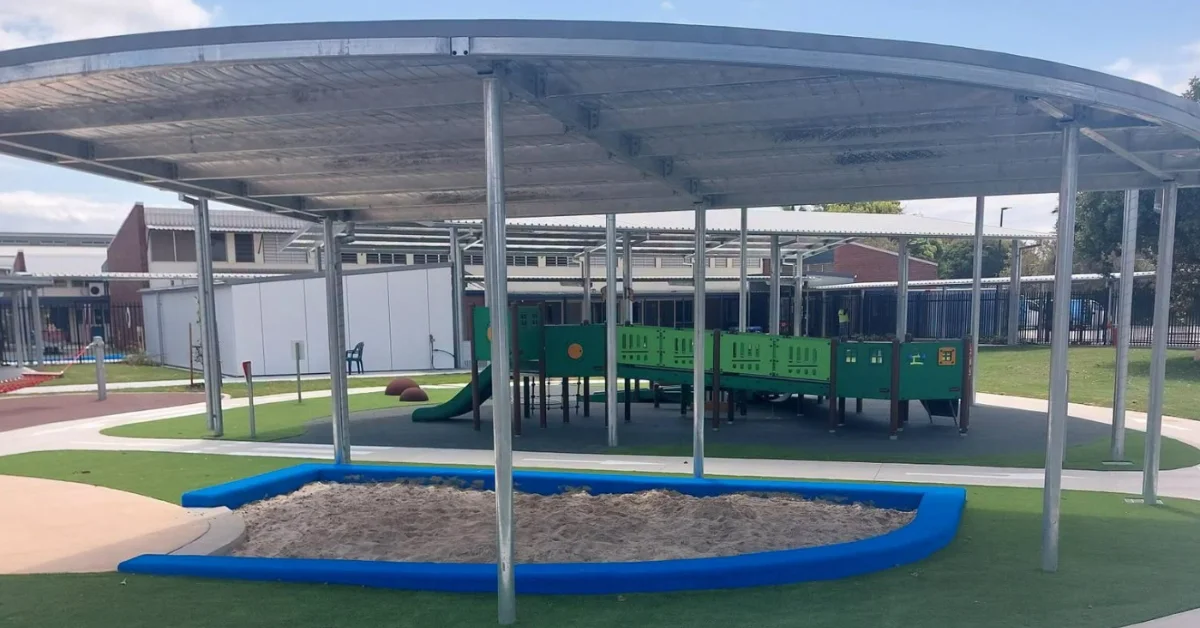
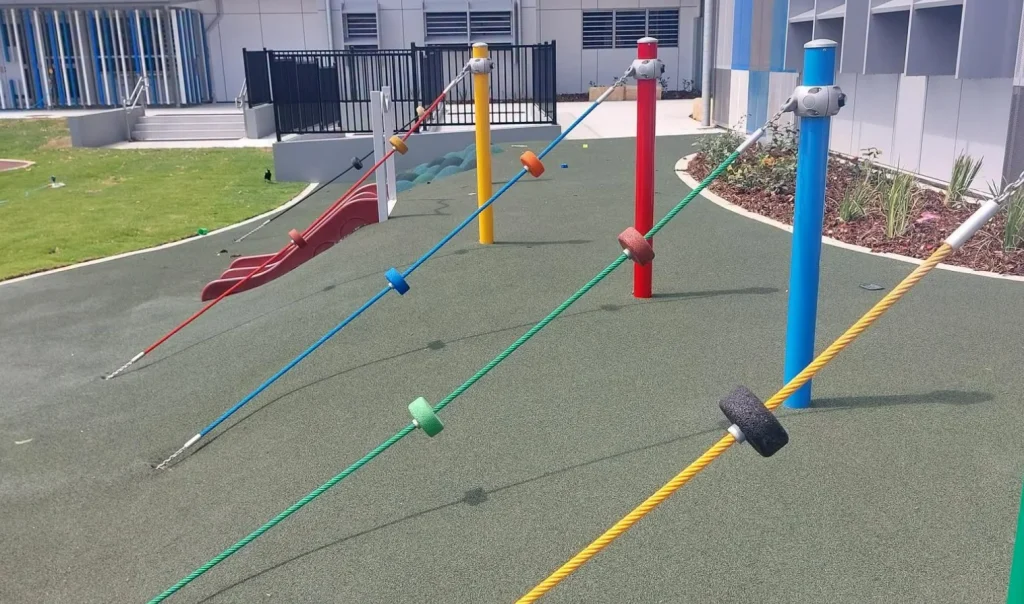
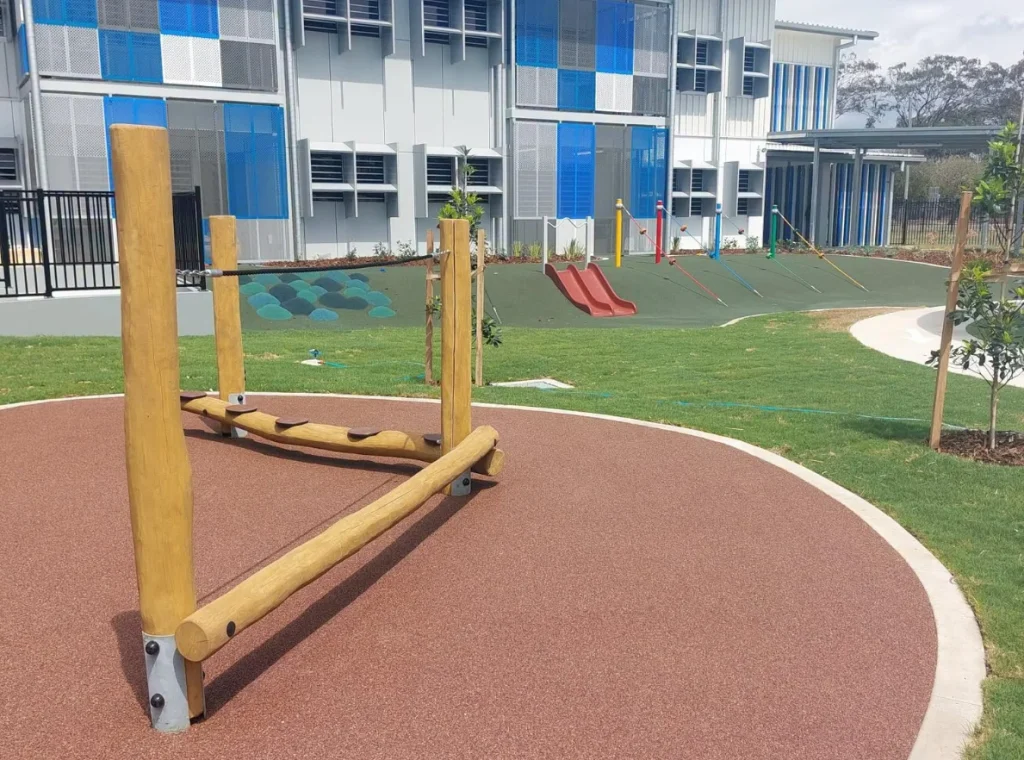
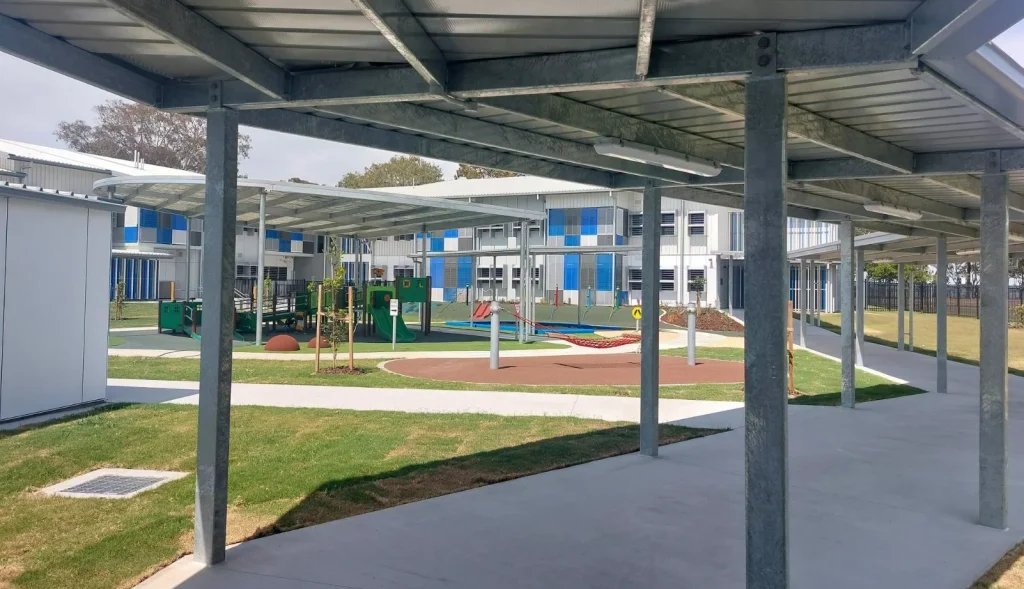
A new playground is receiving its finishing touches ahead of the start of Term 4, with a bike path, road signs, sandpit, slides, balance beams and play structures among the features waiting for students when they return.
Photo Credit: Woody Point Special School/Facebook
A Long Build Reaches The Play Stage
The playground brings the school’s extended run of building projects towards its end, following several years in which staff and students had to adjust as different parts of the campus changed around them. Students were not simply waiting for the finished product. Their ideas were included in the development of the school space, helping shape an area intended for active play, imagination and building new skills.
Photo Credit: Woody Point Special School/Facebook
The finished playground gives them several ways to use the space. A bike path fitted with road signs sits alongside more traditional play equipment, while the sandpit, balance beams and open areas add room for both physical activity and less structured play. The result is a noticeably different use of the school grounds after years dominated by construction.
Photo Credit: Woody Point Special School/Facebook
Students And P&C Leave Their Stamp
Another part of the finished space has come from the school’s P&C, which donated three Buddy Benches for the playground. Hutchinsons worked with Woody Point Special School as its build partner throughout the project, while school staff were acknowledged for supporting students as available spaces shifted during the broader works.
Student involvement remained part of the process as well, with their input recognised alongside the contributions of staff, the P&C and the builder. The playground will open to students from the beginning of Term 4, turning the final stage of the four-year building program into a space they can use every school day.
After years of construction, the bike path, slides, sandpit, balance equipment and three Buddy Benches will be among the last additions before the tools give way to play.
Years of helping young people, feeding residents in hardship and building local support networks have already put Redcliffe names among Moreton Bay’s community award recipients, with nominations now open for the next round of honours.
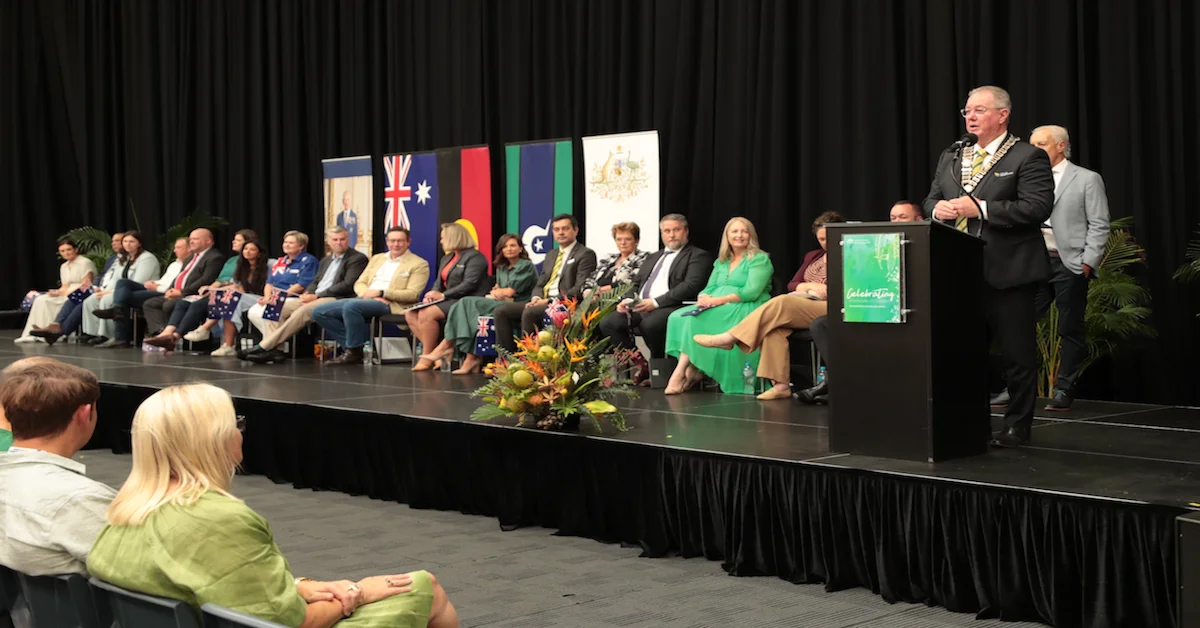
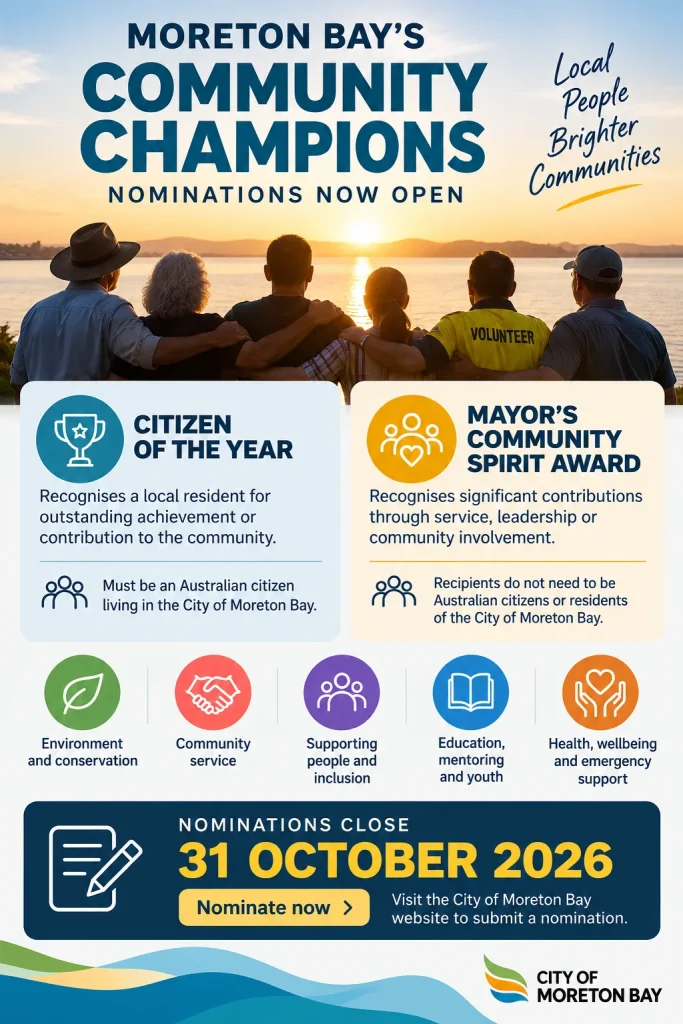
Nominations for the 2027 City of Moreton Bay Australia Day Awards close on 31 October 2026. Citizen of the Year and the Mayor’s Community Spirit Award recognise contributions ranging from long-term volunteering and leadership to exceptional work carried out more recently.
Two decades behind a Redcliffe award
Redcliffe charity founder Tracy Lech received a Mayor’s Community Spirit Award in 2025 after more than two decades working with children and young people experiencing disadvantage on the Peninsula.
Lech established Salt No Limits Inc in Redcliffe, developing volunteer-run programs, weekly sport and activities designed to give young people opportunities for social connection and participation. Salt Café also provides training and volunteering opportunities, with profits directed towards youth programs.
Her award followed another Redcliffe recipient two years earlier. Michelle Gilchrist, president of The Breakfast Club Redcliffe, was among three people to receive a Mayor’s Community Spirit Award in 2023.
Gilchrist’s work has centred on supporting people experiencing homelessness and hardship. City documents recorded The Breakfast Club providing about 1,500 free meals each month, while helping people connect with other support services.
The service has since expanded at the Peninsula Support Hub on Oxley Avenue. By August 2026, The Breakfast Club was running five meal services a week as well as providing food hampers, showers and laundry facilities.
River clean-ups lead to top honour
Moreton Bay’s current Citizen of the Year, Chris Paterson, brings a different form of community service to the awards.
Paterson founded Bamboo Projects, which combines waterway clean-ups with employment and support for people living with disability or mental health challenges. The organisation uses accessible boats in its work, while Paterson volunteers more than 30 hours each week mentoring community members. His team has removed more than 80 tonnes of debris from local waterways.
Paterson described receiving the 2026 Citizen of the Year award as a surreal moment and said the acknowledgement showed that people appreciated the work and volunteer hours behind the project.
Two awards recognise different contributions
Citizen of the Year recognises a local resident for outstanding achievement or contribution to the community. The recipient must be an Australian citizen living in the City of Moreton Bay.
The Mayor’s Community Spirit Award recognises significant contributions through service, leadership or community involvement. Recipients do not need to be Australian citizens or City of Moreton Bay residents. Up to three people can receive the award, while one Citizen of the Year is selected.
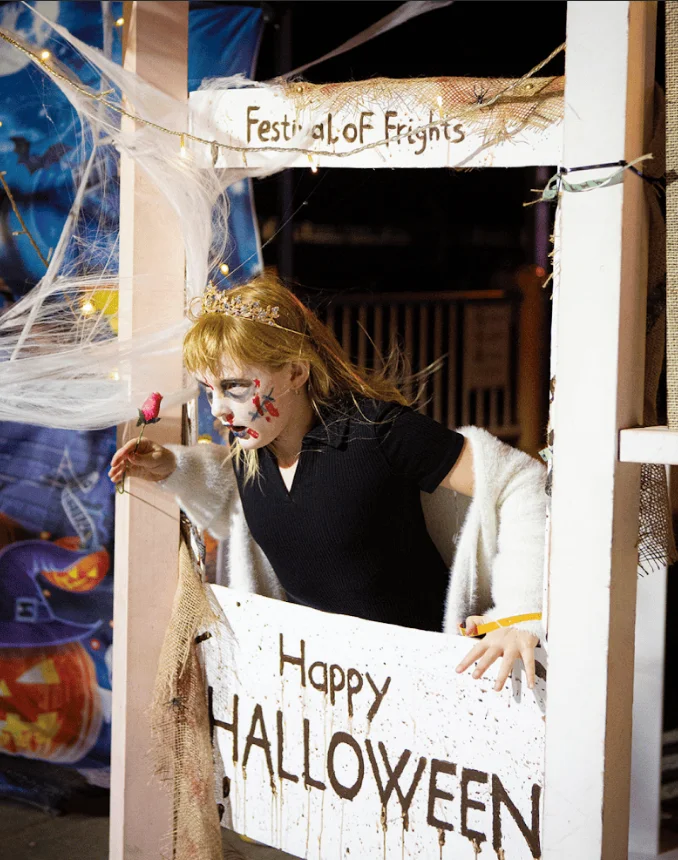
Families and visitors will have a free Halloween evening on the Redcliffe foreshore when the Redcliffe Festival of Frights brings activities, costumes, live entertainment and more than 200 stalls to Redcliffe Parade.
The annual event will run from 4pm to 9pm on Saturday, 31 October, with free entry and a program aimed at different age groups.
Children will be able to take part in a scavenger hunt, while the Best Dressed Competition will give visitors the chance to join the Halloween theme in costume.
Photo Credit: Supplied
Family Activities at Redcliffe Festival of Frights
The family-friendly program will also include roaming stilt walkers, fairies and other spooky characters around the market.
Live entertainment is scheduled throughout the evening, giving families and other visitors activities to see alongside the market stalls and food offerings.
Photo Credit: Supplied
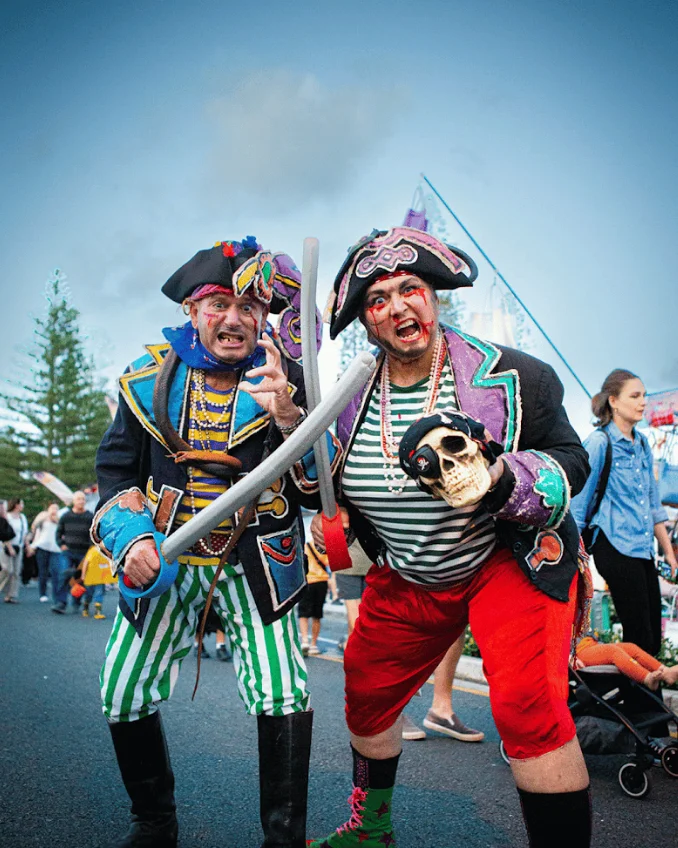
The Best Dressed Competition is open to those arriving in costume, with ghosts, ghouls and pirates among the examples included in the event information.
The combination of activities means the evening program extends beyond the regular market stalls, with entertainment and children’s activities scheduled across the five-hour event.
Photo Credit: Supplied
Redcliffe Foreshore to Host More Than 200 Stalls
More than 200 stalls are planned along Redcliffe Parade, including gourmet street food and Halloween-themed items and treats.
The stalls will operate alongside the family activities and entertainment, bringing the different parts of the Festival of Frights together at the foreshore location.
Redcliffe Markets normally operates every Sunday from 8am to 2pm with more than 200 stalls. The Festival of Frights will instead take place on a Saturday evening, extending activity at the market location into Halloween night.
Free registration is also available for visitors who want a chance to win a gourmet hamper, although registration is separate from the free entry arrangements.
Two sporting careers with deep ties to the Redcliffe Peninsula have come home from Glasgow at very different stages of their Commonwealth Games journeys.
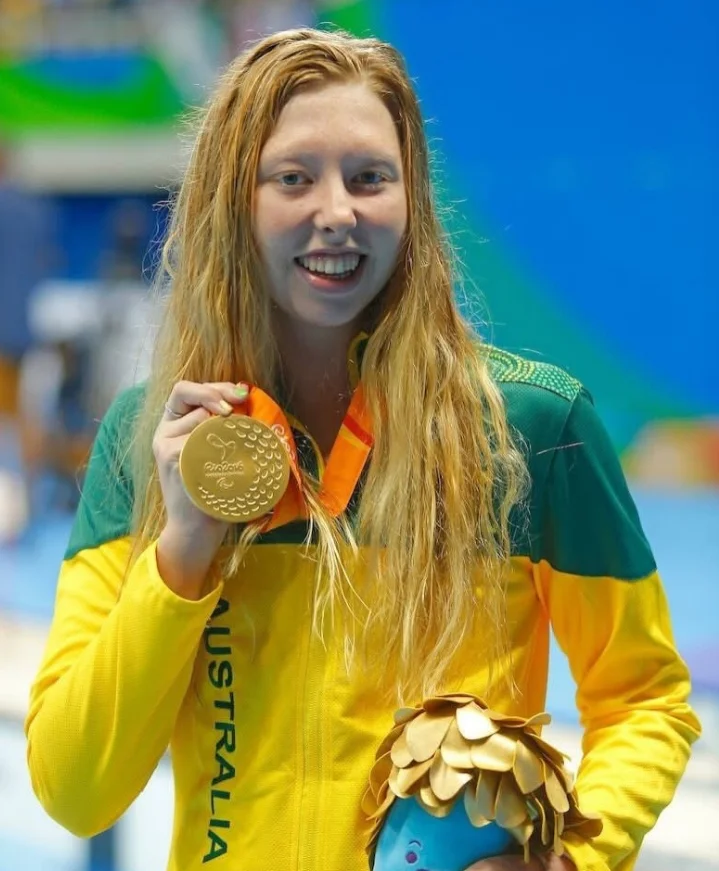
Long jumper Liam Adcock arrived at his first Games after years of injuries, missed selections and rebuilding. Para swimmer Lakeisha Patterson returned to the city where she made her Commonwealth Games debut as a 15-year-old in 2014, this time competing at her fourth Games.
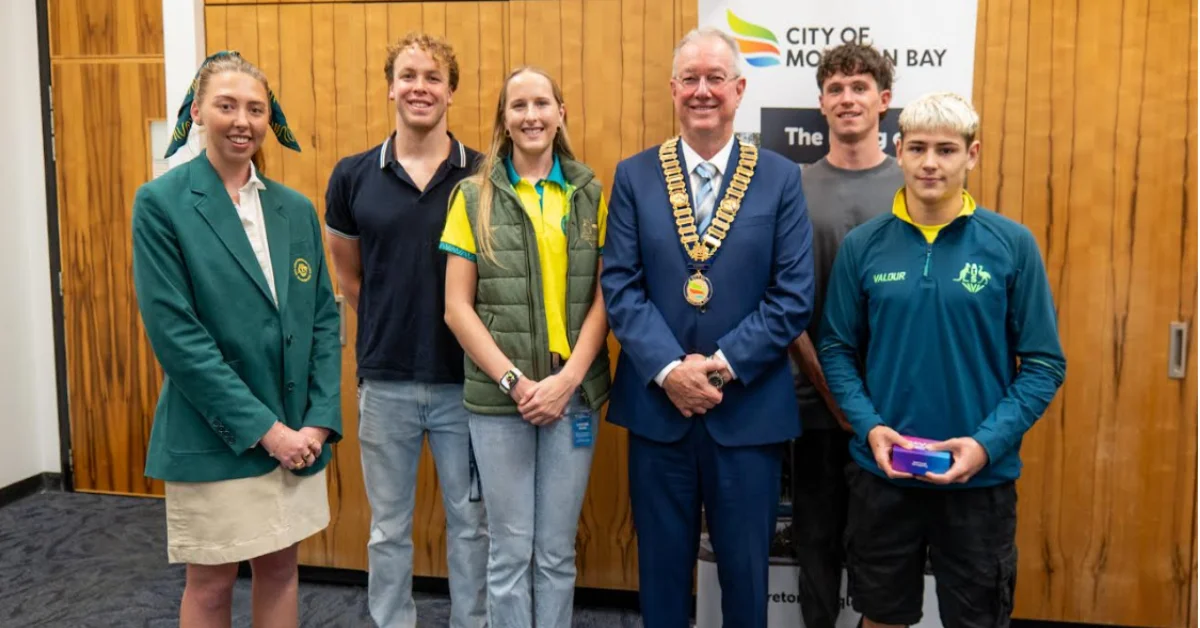
Both were among seven City of Moreton Bay athletes recognised by council after returning from Glasgow. The group collected 14 medals between them — 12 gold, one silver and one bronze — across swimming, para swimming, athletics and boxing.
Two Very Different Roads to Glasgow
Adcock’s route to the Commonwealth Games began much closer to home. He grew up in Redcliffe, attended Scarborough State School and Redcliffe State High School and competed with Redcliffe Little Athletics before later training at Deception Bay.
Selection for Glasgow finally came eight years after he finished second at the 2018 national trials but missed the Commonwealth Games team. The years that followed included ankle surgery and a succession of injuries that kept him away from national championships through several seasons.
By 2023, Adcock had returned to the international stage at the World Athletics Championships. He made his Olympic debut in Paris a year later, then produced the strongest results of his career in 2025, including bronze at the World Indoor Championships and victory at the Rome Diamond League with a personal-best jump of 8.34 metres.
A third Australian title in 2026, secured with an 8.26-metre jump, earned him the Commonwealth Games place that had eluded him earlier in his career.
Patterson’s connection with Glasgow stretches much further back. The para swimmer, who also has a Scarborough swimming connection, first represented Australia at the 2014 Commonwealth Games in the Scottish city and won bronze in the 100m freestyle S8.
Twelve years later, she returned for her fourth Commonwealth Games carrying one of the most established international records among Moreton Bay’s representatives. Before Glasgow 2026, Swimming Australia listed Patterson with two Commonwealth Games gold medals and one bronze, alongside three Paralympic gold medals and three world championship titles.
Her career has included 400m freestyle gold at Rio 2016 in world-record time, another Paralympic title in Tokyo and silver at Paris 2024. Patterson then returned to the top of the 400m freestyle at the 2025 World Para Swimming Championships in Singapore.
Moreton Bay Contingent Returns With 14 Medals
Adcock and Patterson were joined in the Moreton Bay contingent by swimmers Harrison Turner and Sam Short, para swimmer Kirralee Hayes, athlete Calab Law and boxer Jye Dixon.
Council recognised the seven athletes after their return, with Mr Peter Flannery acknowledging the level required to represent Australia internationally and the contribution of the group to Moreton Bay’s sporting record.
The homecoming comes with both Redcliffe-linked athletes already looking beyond Glasgow. Patterson marked the 10th anniversary of her first Paralympic gold in September by writing that she was still chasing further goals, while Adcock closed his season by reflecting on a year of setbacks, adaptation and lessons before turning his attention to what comes next.
That was how close the Redcliffe Dolphins came to reaching the 2025 Hostplus Cup Grand Final.
They led Burleigh 16–6 deep into last year’s preliminary final at UAA Park and appeared to have done enough. Then Creedence Toia scored. Takitau Mapapalangi followed him over. Josh Rogers converted both and, almost before Redcliffe could absorb what was happening, a 10-point lead had become an 18–16 defeat.
A year later, the road to the Grand Final has brought the Dolphins straight back to Burleigh.
Only this time, the Bears are coming to Redcliffe.
Sunday’s preliminary final at Kayo Stadium is a rematch with the side that ended Redcliffe’s last season, on the ground where the Dolphins could yet play twice more before 2026 is finished. Win and they will be back there six days later for the Hostplus Cup Grand Final.
There is a symmetry to the past 12 months that would have been difficult to script. Burleigh ended Redcliffe’s 2025 season, then turned up at Kayo Stadium for Dave Elliott’s first Cup game as Dolphins coach on March 8 and won 22–12.
Go further back and these clubs have been getting in each other’s way in important games for decades.
Burleigh won its first Queensland Cup premiership by beating Redcliffe 12–10 in the 1999 Grand Final. Redcliffe returned the favour at Dolphin Oval in 2003, winning 31–18 to claim the title. In 2016 they met in the decider again, this time with the Bears winning 26–16 at Suncorp Stadium.
Two years later, Redcliffe beat Burleigh 13–6 in the major semi-final on the way to its most recent Cup premiership.
It is a rivalry woven through different generations of the competition and, for Redcliffe, through a much longer history. The club was founded in 1947, entered Brisbane first grade in 1960 and won its first BRL premiership five years later with a young Arthur Beetson in the side.
More than 60 years after that breakthrough, another Redcliffe team has arrived at another September game with Burleigh standing in the way.
The six months since Round 1
That 22–12 loss to the Bears in March did not set the pattern for Redcliffe’s season. The Dolphins won 14 of their 20 regular-season games, drew one and finished second on 35 competition points, three behind minor premiers Sunshine Coast. Their +233 points differential was the best in the competition.
There were some ugly afternoons mixed in with the good ones.
Ipswich provided perhaps the clearest example in June, scoring all 28 of its points before half-time at Kayo Stadium. Redcliffe rallied after the break but lost 28–18, and captain Sheldon Pitama made no attempt to soften the assessment afterwards.
“Too many errors, too many penalties,” Pitama said. “In this competition, you can’t come out of the sheds like that.”
He also spoke about the players taking “individual accountability and team accountability” into their video review.
The significance of those comments became clearer as the season went on. Redcliffe recovered, tightened its hold on second place and arrived in September with a home qualifying final against Central Queensland.
Then, rather inconveniently, another bad first half arrived.
The Capras scored three times in the opening 32 minutes and led 16–4 at the break. This time Redcliffe found a way out. Jude Saldanha crossed early in the second half, Brent Woolf levelled the scores with 17 minutes remaining and Trai Fuller put the Dolphins ahead for the first time with his 76th-minute try.
Redcliffe won 20–16 and, instead of playing sudden-death football last weekend, had the luxury of watching Burleigh survive a 12–10 scrap with Townsville.
A few familiar faces know how close is close
The qualifying final carried another milestone. It was Pitama’s 150th Cup appearance, all of them in Redcliffe colours.
Dave Elliott described him beforehand as “a stalwart of the club”, revealing that when the playing group was asked to choose its captain at the start of the year, about 90 per cent nominated Pitama.
Sam Elliott has his own reason for understanding what this stage of the season can mean.
He played 11 Cup games for Redcliffe in 2022, including the Grand Final loss to Norths, before eventually joining the Devils. In 2024 he was on the other side when Norths beat Redcliffe 34–20 in another Grand Final at Kayo Stadium.
When the forward returned to Redcliffe for 2026, he did not pretend the old result had been forgotten. “I feel like there’s unfinished business,” he said earlier this season.
There has been quite a bit of that around Redcliffe lately.
The Dolphins were Grand Finalists in 2022 and again in 2024. Last season was very different: they were ninth late in the campaign before four straight wins carried them all the way to Burleigh and that 16–6 lead with seven minutes remaining.
This year there has been no late scramble. Second place brought a home qualifying final, the win over the Capras brought a weekend off, and now the preliminary final comes to Redcliffe as well.
There will be time before Sunday to examine the team lists, the match-ups and what Redcliffe needs to do differently from that opening-round meeting in March.
For now, there is enough in how the two clubs arrived here.
Burleigh has been on both sides of some important pages in Redcliffe’s Cup history: Grand Finals in 1999, 2003 and 2016, the 2018 finals series and those extraordinary closing minutes last September.
Then came Round 1 this year. Now comes Sunday.
The winner advances to the September 26 Grand Final, also at Kayo Stadium. For Redcliffe, that means a season that began at home against Burleigh could reach its defining weekend at home against Burleigh, with another game on the same ground waiting six days later.
After several Septembers spent getting painfully close, Redcliffe has earned another chance to see where this one leads.